De qué trata
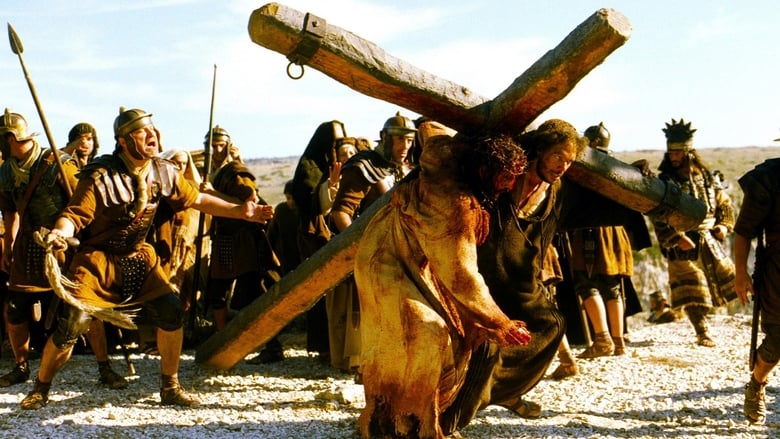
According to the provided overview, the film portrays the final twelve hours of Jesus of Nazareth's life. It begins after the Last Supper as Jesus enters Gethsemane, where he resists Satan's temptation and is then betrayed by Judas and arrested. He is brought to Jerusalem and judged by the Pharisees on a charge of blasphemy; Pontius Pilate, the Roman governor, wrestles with the decision and consults Herod, who returns the case to Pilate. Pilate offers the crowd a choice between Jesus and the prisoner Barabbas; the crowd demands Barabbas's release and Jesus's execution. After a brutal scourging, Pilate presents the wounded Jesus to the crowd, asking if this is enough, but the crowd demands crucifixion. Jesus carries the cross through Jerusalem to Calvary, faces a final temptation of feeling forsaken by the Father, and dies speaking words addressed to his mother Mary and committing his spirit to the Father.
The biblical figures listed for the film are Peter, Judas Iscariot, Pontius Pilate, Mary, and Mary Magdalene. The associated scripture ranges are Matthew 26–27 and John 18–19, which together cover the Last Supper, Gethsemane, the arrest, the Jewish and Roman trials, the crucifixion, and the death of Christ.
Dónde está en la Biblia
En qué se aparta de la Biblia
The provided overview describes several moments that invite comparison with the scripture. The film highlights a personal encounter with Satan's temptation in Gethsemane and a final temptation on the cross rooted in the feeling of being forsaken by the Father; viewers can watch for how the film visualises inner spiritual conflict alongside the external events recorded in the Gospels. The Last Supper itself appears in the overview only as the starting point; the institution of the bread and cup — words the church has long treated as central — is worth watching for in the film, since the overview mentions the meal but not the words Jesus spoke over them. Matthew 26:26-28 records that moment: 'Take, eat; this is my body... Drink ye all of it; for this is my blood of the covenant, which is poured out for many unto remission of sins.' Adaptations often compress the Last Supper, Gethsemane, and the trials into a single sequence.
The overview also notes that Jesus carries the cross through Jerusalem streets to Golgotha and is nailed to the cross there. In John 18:1-12, the arrest itself includes details sometimes dramatised or condensed: Jesus goes forth and identifies himself to the soldiers with the words 'I am he,' the soldiers fall backward to the ground, Peter draws a sword and cuts off the right ear of the high priest's servant Malchus, and Jesus declares, 'the cup which the Father hath given me, shall I not drink it?' Viewers can compare how the film stages the arrest, whether it includes the ear of Malchus and Jesus's identification of himself, and how it handles the dialogue between Pilate and the crowd around Barabbas, which the four Gospels report in slightly different forms.
Preguntas para conversar
- 1
How does the film portray his willingness to face what is coming, and how does that compare with the Gospels?
- 2
What does the Last Supper mean in the film, and where does the scripture locate it?
- 3
Why does the crowd call for Barabbas rather than Jesus, and how does that fit the trial before Pilate?
Dónde verla
Disponibilidad para Canadá; cambia con el tiempo. Verifica en la plataforma antes de verla. TMDb ↗
Reflexiones sobre Mateo
Después de verla, lee el pasaje: encontrarás detalles que ninguna película alcanza a mostrar.