BIBLE BOOK GUIDE
1 Kings
22 chapters
1 Kings traces Israel's monarchy from Solomon's glory to the kingdom's division and decline, demonstrating that obedience to God brings blessing while rebellion brings judgment.
1 Kings
Choose a chapter
Pick a chapter and it opens in the Current chapter tab. Come back here whenever you want to choose another one.
Why this book was written
Written around or after the exile, 1 Kings explains the spiritual causes of Israel's division and decline: kings and people forsaking God's law and worshipping idols. The book contrasts the glory of Solomon's temple, the rise of faithful prophets like Elijah, and the wickedness of unfaithful kings like Ahab and Jeroboam, calling the people to return to the LORD and live by His word.
Structure
- 1–4David's Final Days and Solomon's Accession
- 5–8Solomon's Building of the Temple
- 9–11Solomon's Rise and Fall and the Division of the Kingdom
- 12–16Divided Kingdom: Rival Northern and Southern Dynasties
- 17–19The Prophet Elijah Emerges
- 20–22The End of Ahab's Dynasty and Micaiah's True vs. False Prophecy
Major themes
The Rise and Fall of Kingship Under God's Sovereignty
From Solomon's glory (1 Kings 1–10) to the division of the kingdom (1 Kings 12), the rise and fall of Israel's monarchy reveals the Lord's sovereignty—obedience brings blessing, rebellion brings judgment.
Temple, Worship, and God's Presence
Solomon's construction of the temple (1 Kings 5–8) displays God's Name dwelling among His people, yet worship without faithfulness becomes empty ritual (1 Kings 9:1–9).
The Prophet's Voice Versus the King's Power
Elijah's rise under Ahab (1 Kings 17–19) confronts Baal worship and royal apostasy, showing that the Lord's word outranks any king and that He alone is God.
Covenant Faithfulness Tested
Deuteronomy's covenant terms are tested throughout: obedience brings blessing (1 Kings 3:14), deviation brings discipline (1 Kings 11:31–39), and God remains faithful to His covenant.
Spiritual Warfare Against Baalism
From Jezebel's importation of Baal worship (1 Kings 16:29–33) to the contest on Carmel (1 Kings 18), the book calls God's people to decisive allegiance.
How it points to Christ
1 Kings typologically points to Christ: Solomon is a shadow of the Prince of Peace (Isa 9:6), whose throne and wisdom prefigure Christ's greater kingship (1 Kings 4:29–34; Luke 11:31); the temple Solomon built foreshadows Christ Himself as the true dwelling of God among His people (John 2:19–21); Elijah's prophetic mission of miracles and call to repentance mirrors John the Baptist's role before Christ (Mal. 4:5; Matt. 17:12–13); and the One greater than Solomon sits on David's throne, establishing an everlasting kingdom.
Key verses
- 3:9Solomon's request for a discerning heart delights God and sets the model for godly leadership.
- 8:27Solomon's temple dedication acknowledges that even the highest heaven cannot contain God, hinting that His presence is not confined to a building.
- 9:4God's conditional covenant with Solomon: faithfulness ensures a lasting dynasty—a standard Solomon later fails to meet.
- 11:11God declares the kingdom will be torn from Solomon because of unfaithfulness, foreshadowing national and spiritual fracture.
- 18:21Elijah's challenge confronts Israel with the fundamental choice between the LORD and Baal.
- 19:11–12God reveals Himself not in dramatic displays but in a still, small voice, teaching that His presence often comes quietly.
- 21:25Ahab's seizure of Naboth's vineyard epitomizes the corruption of royal power and collapse of justice.
- 22:14Micaiah's resolve to speak only what the LORD says models the courage of a true prophet忠实 to God's word.
Films & series on 1 Kings
Each has a guide: scripture sources, where it departs from the Bible, discussion questions, and where to watch
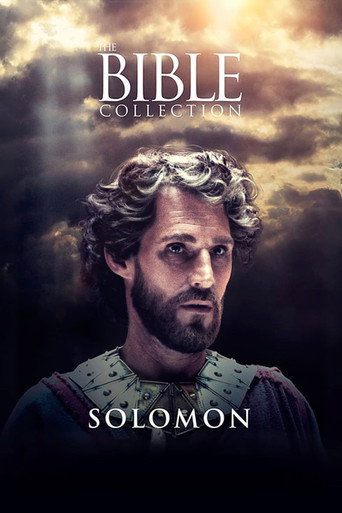
Solomon
Film · 1997
David, now an old man, is still king of Israel. Among his sons, the ambitious Adonijah and the clever Solomon, fierce rivals, since both are prospective heirs to the throne and only one can be.
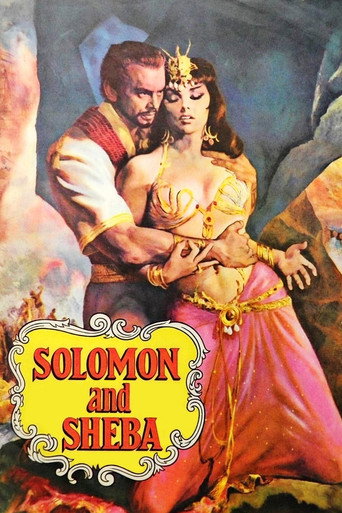
Solomon and Sheba
Film · 1959
Near death, King David has a vision that his poet son, Solomon, should succeed him, rather than hot-headed Adonijah. Furious, Adonijah departs the court, swearing he will become king. Other rulers are concerned that Solomon's benevolent rule and interest in monotheism will threaten their tyrannical, polytheistic kingdoms. The Queen of Sheba makes an agreement with the Egyptian pharaoh to corrupt Solomon for their mutual benefit.
People in this book
Questions for reflection
- ·Solomon began by asking for wisdom and pleased God (1 Kings 3:5–14), yet in later years his heart turned through foreign wives (1 Kings 11:1–8). How can gifting and early faithfulness erode over time? Where do I need to guard my heart today?
- ·God promised Solomon that a fully devoted heart would establish his throne (1 Kings 9:4–5), yet the kingdom's division reveals human failure. Do I treat God's promises as automatic, neglecting the responsibility of obedience?
- ·Elijah stood alone against 450 prophets of Baal on Carmel (1 Kings 18:19–40). In my life today, am I willing to stand for truth even when I feel alone?
- ·At Horeb, God told Elijah He was not in the wind, fire, or earthquake, but in a still, small voice (1 Kings 19:11–13). Am I missing God's gentle word amid the noise of my life?
- ·Jeroboam set up two golden calves so the people would not go up to Jerusalem (1 Kings 12:26–33), replacing God's command with convenient worship. Am I substituting seemingly reasonable alternatives for God's clear word?
Where 1 Kings fits in the Bible's storyline
This book appears in the 12-stop storyline at:
Where to start reading the Bible? See the full 12-stop storyline
Want to read 1 Kings start to finish? Open the reader for parallel Chinese/English text and ask anything as you go.
Start reading 1 Kings1 Kings
Chapter 21
1And it came to pass after these things, that Naboth the Jezreelite had a vineyard, which was in Jezreel, hard by the palace of Ahab king of Samaria.
2And Ahab spake unto Naboth, saying, Give me thy vineyard, that I may have it for a garden of herbs, because it is near unto my house; and I will give thee for it a better vineyard than it: or, if it seem good to thee, I will give thee the worth of it in money.
3And Naboth said to Ahab, Jehovah forbid it me, that I should give the inheritance of my fathers unto thee.
4And Ahab came into his house heavy and displeased because of the word which Naboth the Jezreelite had spoken to him; for he had said, I will not give thee the inheritance of my fathers. And he laid him down upon his bed, and turned away his face, and would eat no bread.
5But Jezebel his wife came to him, and said unto him, Why is thy spirit so sad, that thou eatest no bread?
6And he said unto her, Because I spake unto Naboth the Jezreelite, and said unto him, Give me thy vineyard for money; or else, if it please thee, I will give thee another vineyard for it: and he answered, I will not give thee my vineyard.
7And Jezebel his wife said unto him, Dost thou now govern the kingdom of Israel? arise, and eat bread, and let thy heart be merry: I will give thee the vineyard of Naboth the Jezreelite.
8So she wrote letters in Ahab's name, and sealed them with his seal, and sent the letters unto the elders and to the nobles that were in his city, and that dwelt with Naboth.
9And she wrote in the letters, saying, Proclaim a fast, and set Naboth on high among the people:
10and set two men, base fellows, before him, and let them bear witness against him, saying, Thou didst curse God and the king. And then carry him out, and stone him to death.
11And the men of his city, even the elders and the nobles who dwelt in his city, did as Jezebel had sent unto them, according as it was written in the letters which she had sent unto them.
12They proclaimed a fast, and set Naboth on high among the people.
13And the two men, the base fellows, came in and sat before him: and the base fellows bare witness against him, even against Naboth, in the presence of the people, saying, Naboth did curse God and the king. Then they carried him forth out of the city, and stoned him to death with stones.
14Then they sent to Jezebel, saying, Naboth is stoned, and is dead.
15And it came to pass, when Jezebel heard that Naboth was stoned, and was dead, that Jezebel said to Ahab, Arise, take possession of the vineyard of Naboth the Jezreelite, which he refused to give thee for money; for Naboth is not alive, but dead.
16And it came to pass, when Ahab heard that Naboth was dead, that Ahab rose up to go down to the vineyard of Naboth the Jezreelite, to take possession of it.
17And the word of Jehovah came to Elijah the Tishbite, saying,
18Arise, go down to meet Ahab king of Israel, who dwelleth in Samaria: behold, he is in the vineyard of Naboth, whither he is gone down to take possession of it.
19And thou shalt speak unto him, saying, Thus saith Jehovah, Hast thou killed and also taken possession? And thou shalt speak unto him, saying, Thus saith Jehovah, In the place where dogs licked the blood of Naboth shall dogs lick thy blood, even thine.
20And Ahab said to Elijah, Hast thou found me, O mine enemy? And he answered, I have found thee, because thou hast sold thyself to do that which is evil in the sight of Jehovah.
21Behold, I will bring evil upon thee, and will utterly sweep thee away and will cut off from Ahab every man-child, and him that is shut up and him that is left at large in Israel:
22and I will make thy house like the house of Jeroboam the son of Nebat, and like the house of Baasha the son of Ahijah for the provocation wherewith thou hast provoked me to anger, and hast made Israel to sin.
23And of Jezebel also spake Jehovah, saying, The dogs shall eat Jezebel by the rampart of Jezreel.
24Him that dieth of Ahab in the city the dogs shall eat; and him that dieth in the field shall the birds of the heavens eat.
25(But there was none like unto Ahab, who did sell himself to do that which was evil in the sight of Jehovah, whom Jezebel his wife stirred up.
26And he did very abominably in following idols, according to all that the Amorites did, whom Jehovah cast out before the children of Israel.)
27And it came to pass, when Ahab heard those words, that he rent his clothes, and put sackcloth upon his flesh, and fasted, and lay in sackcloth, and went softly.
28And the word of Jehovah came to Elijah the Tishbite, saying,
29Seest thou how Ahab humbleth himself before me? because he humbleth himself before me, I will not bring the evil in his days; but in his son's days will I bring the evil upon his house.