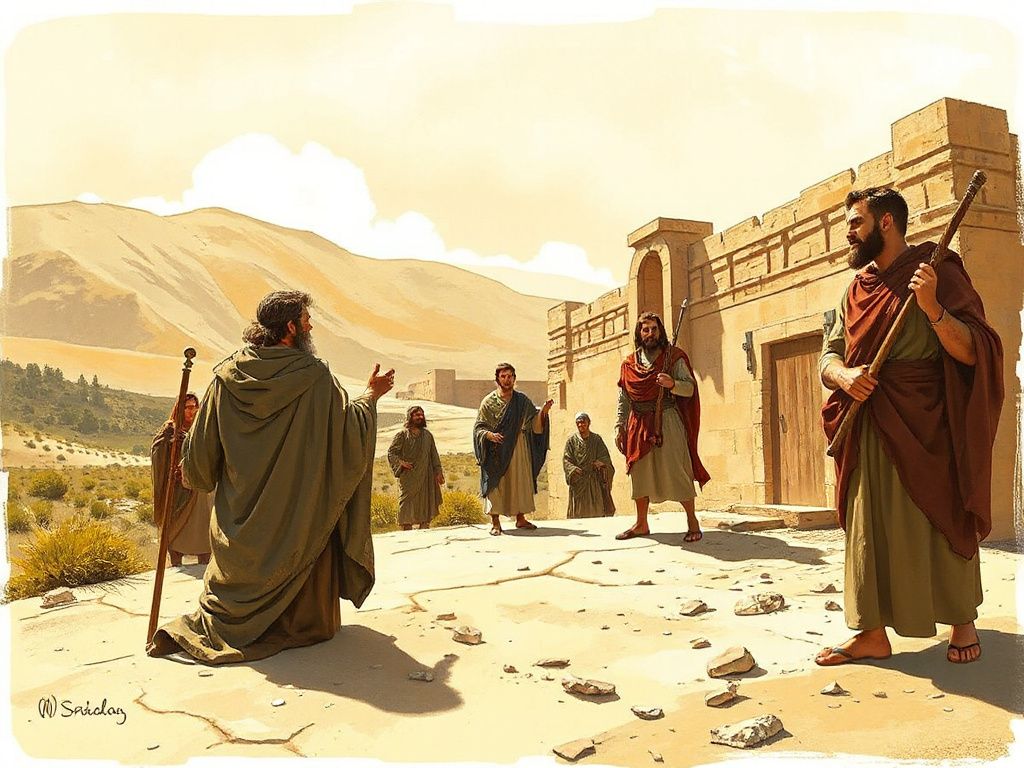
ESTUDIO DEL CAPÍTULO
Salmos 50 — Dios juzga la forma y la infidelidad
El salmo de Asaf retrata a Dios convocando al cielo y a la tierra para juzgar a Su pueblo, rechaza el sacrificio vacío, expone los pecados ocultados de los malvados, y llama a la acción de gracias y a un camino recto de vida.
Escritura
- 1.El Dios de dioses, Jehová, ha hablado, y convocado la tierra, Desde el nacimiento del sol hasta donde se pone.A Psalm of Asaph. The Mighty One, God, Jehovah, hath spoken, And called the earth from the rising of the sun unto the going down thereof.
- 2.De Sion, perfección de hermosura, Dios ha resplandecido.Out of Zion, the perfection of beauty, God hath shined forth.
- 3.Vendrá nuestro Dios, y no callará; Fuego consumirá delante de él, Y tempestad poderosa le rodeará.Our God cometh, and doth not keep silence: A fire devoureth before him, And it is very tempestuous round about him.
- 4.Convocará a los cielos de arriba, Y a la tierra, para juzgar a su pueblo.He calleth to the heavens above, And to the earth, that he may judge his people:
- 5.Juntadme mis santos, Los que hicieron conmigo pacto con sacrificio.Gather my saints together unto me, Those that have made a covenant with me by sacrifice.
- 6.Y los cielos declararán su justicia, Porque Dios es el juez. SelahAnd the heavens shall declare his righteousness; For God is judge himself. [[Selah
- 7.Oye, pueblo mío, y hablaré; Escucha, Israel, y testificaré contra ti: Yo soy Dios, el Dios tuyo.Hear, O my people, and I will speak; O Israel, and I will testify unto thee: I am God, even thy God.
- 8.No te reprenderé por tus sacrificios, Ni por tus holocaustos, que están continuamente delante de mí.I will not reprove thee for thy sacrifices; And thy burnt-offerings are continually before me.
- 9.No tomaré de tu casa becerros, Ni machos cabríos de tus apriscos.I will take no bullock out of thy house, Nor he-goats out of thy folds.
- 10.Porque mía es toda bestia del bosque, Y los millares de animales en los collados.For every beast of the forest is mine, And the cattle upon a thousand hills.
- 11.Conozco a todas las aves de los montes, Y todo lo que se mueve en los campos me pertenece.I know all the birds of the mountains; And the wild beasts of the field are mine.
- 12.Si yo tuviese hambre, no te lo diría a ti; Porque mío es el mundo y su plenitud.If I were hungry, I would not tell thee; For the world is mine, and the fulness thereof.
- 13.¿He de comer yo carne de toros, O de beber sangre de machos cabríos?Will I eat the flesh of bulls, Or drink the blood of goats?
- 14.Sacrifica a Dios alabanza, Y paga tus votos al Altísimo;Offer unto God the sacrifice of thanksgiving; And pay thy vows unto the Most High:
- 15.E invócame en el día de la angustia; Te libraré, y tú me honrarás.And call upon me in the day of trouble; I will deliver thee, and thou shalt glorify me.
- 16.Pero al malo dijo Dios: ¿Qué tienes tú que hablar de mis leyes, Y que tomar mi pacto en tu boca?But unto the wicked God saith, What hast thou to do to declare my statutes, And that thou hast taken my covenant in thy mouth,
- 17.Pues tú aborreces la corrección, Y echas a tu espalda mis palabras.Seeing thou hatest instruction, And castest my words behind thee?
- 18.Si veías al ladrón, tú corrías con él, Y con los adúlteros era tu parte.When thou sawest a thief, thou consentedst with him, And hast been partaker with adulterers.
- 19.Tu boca metías en mal, Y tu lengua componía engaño.Thou givest thy mouth to evil, And thy tongue frameth deceit.
- 20.Tomabas asiento, y hablabas contra tu hermano; Contra el hijo de tu madre ponías infamia.Thou sittest and speakest against thy brother; Thou slanderest thine own mother's son.
- 21.Estas cosas hiciste, y yo he callado; Pensabas que de cierto sería yo como tú; Pero te reprenderé, y las pondré delante de tus ojos.These things hast thou done, and I kept silence; Thou thoughtest that I was altogether such a one as thyself: But I will reprove thee, and set them in order before thine eyes.
- 22.Entended ahora esto, los que os olvidáis de Dios, No sea que os despedace, y no haya quien os libre.Now consider this, ye that forget God, Lest I tear you in pieces, and there be none to deliver:
- 23.El que sacrifica alabanza me honrará; Y al que ordenare su camino, Le mostraré la salvación de Dios.Whoso offereth the sacrifice of thanksgiving glorifieth me; And to him that ordereth his way aright Will I show the salvation of God.
Qué significa este pasaje
El Salmo 50 se divide en dos discursos divinos enmarcados por una teofanía. Dios llama al cielo y a la tierra como testigos (vv. 1–6), y luego se dirige a Su pueblo del pacto: No necesita sus animales porque toda bestia y ave ya pertenecen a Él (vv. 7–13). Lo que Él desea es el «sacrificio de acción de gracias» y el cumplimiento de los votos — adoración que brota de un corazón que Le invoca en la angustia y luego Le glorifica por la liberación (vv. 14–15). El capítulo redefine así el sacrificio verdadero como gratitud relacional más que como ofrenda material.
El segundo discurso se vuelve bruscamente hacia los malvados (vv. 16–21). Dios denuncia a quienes recitan Sus estatutos y toman Su pacto en su boca mientras aborrecen la disciplina, se asocian con ladrones y adúlteros, usan su lengua para el engaño y la calumnia. La razón de que el juicio se haya demorado no es la ignorancia divina sino la paciencia divina; los malvados tomaron el silencio de Dios como aprobación, asumiendo que Él era «igual que ellos». El salmo advierte que Dios pondrá estos pecados en orden delante de sus ojos.
El versículo final (23) regresa al tema inicial: quien ofrece el sacrificio de acción de gracias glorifica a Dios, y quien ordena bien su camino verá la salvación de Dios. La salvación y la adoración debida se enmarcan así no como ejecución ritual sino como una vida marcada por la gratitud, la integridad y la reverencia. El Selah tras el versículo 6 probablemente marca una pausa reflexiva sobre el papel de Dios como juez.
Contexto
El capítulo se identifica como «Salmo de Asaf», situándolo dentro de la colección asafita (Salmos 73–83), asociada con los cantores levíticos asafitas. La estructura bipartita de discurso judicial del salmo es su propio rasgo organizador: una escena de convocatoria cósmica (vv. 1–6), una palabra a los fieles (vv. 7–15), y una palabra a los malvados (vv. 16–22), cerrando con un principio general (v. 23). La nota curada proporcionada solo lo señala como material incorporado del corpus de los Salmos y no especifica un contexto.
Las referencias cruzadas se agrupan en torno a tres ideas reiteradas del capítulo: clamar a Dios en la angustia y ser librado (Salmos 34:3–4; 81:7; 91:15–16; 107:6, 19, 28), ofrecer alabanza como sacrificio vivo (Hebreos 13:15), y votos y ofrendas de agradecimiento (Salmos 56:12; Zacarías 13:9). Santiago 5:13 empareja la oración en el sufrimiento con la alabanza en la alegría, haciéndose eco del patrón de clamor y glorificación del versículo 15.
Palabras clave del original
- H0430 ʾĕlōhiym («Dios») aparece repetidamente en el Salmo 50 (vv. 1, 2, 3, 6, 7, 14, 16, 22, 23), anclando la afirmación central del salmo: que el Dios que convoca a la creación es también el Juez que evalúa la adoración y la conducta de Israel.
- H0410 ʾēl («Poderoso») en el versículo 1 se acumula con ʾĕlōhiym y el nombre del pacto yəhwāh, una triple designación que nombra el poder de Dios, Su identidad divina, y Su relación pactada con Israel antes de que se convoque el tribunal cósmico.
- H7121 El verbo qārāʾ («convoca/llama») se repite en los versículos 1, 4 y 15. Dios convoca a la tierra como juez (v. 1), convoca al cielo y a la tierra para juzgar a Su pueblo (v. 4), e invita a Su pueblo a invocarlo en la angustia (v. 15) — vinculando la convocatoria divina y la oración humana como acciones espejadas.
Versículos relacionados
- Psalms 50:15 Cruzado con Salmos 91:15, donde Dios promete responder, estar con, librar y honrar al que Le invoca — reforzando la secuencia de clamor/libramiento/glorificación que ancla el versículo 15 de este salmo.
- Hebrews 13:15 Hebreos 13:15 aplica el lenguaje del «sacrificio de acción de gracias» de Salmo 50:14, 23 a la adoración del nuevo pacto de la iglesia, replanteando la alabanza como el fruto continuo de labios que confiesan el nombre de Dios.
- Psalms 56:12 Salmos 56:12 — «Sobre mí están tus votos, oh Dios; te ofreceré acciones de gracias» — se hace eco del llamado a cumplir votos al Altísimo en Salmo 50:14, fundamentando las ofrendas de agradecimiento en el compromiso previo del adorador con Dios.
Preguntas frecuentes
¿Significa Salmo 50:8–13 que Dios abolió el sacrificio de animales?
El salmo no abolió explícitamente el sacrificio; niega que Dios necesite los animales porque todas las criaturas ya son Suyas. Dentro del propio salmo, el sacrificio es reinterpretado: el rito sin el «sacrificio de acción de gracias» (vv. 14, 23) es rechazado. Si esto implica una cancelación profética del sistema sacrificial no se afirma en el propio capítulo.
¿Quiénes son los «malvados» addressed en los versículos 16–21?
El propio capítulo los describe como personas que recitan los estatutos de Dios y guardan Su pacto en su boca pero aborrecen la instrucción, se unen con ladrones y adúlteros, y usan su lengua para el engaño y la calumnia (vv. 16–20). El texto no especifica si son forasteros, israelitas apóstatas o una categoría más amplia; la denuncia se centra en la contradicción entre profesión y conducta.
¿Qué significa el «sacrificio de acción de gracias» en el Salmo 50?
En los versículos 14 y 23, el «sacrificio de acción de gracias» (hebreo todah) se contrapone al holocausto rutinario que Dios no necesita (vv. 8–13). Se empareja con el cumplimiento de los votos (v. 14) y con un camino de vida ordenado rectamente (v. 23). El propio texto lo presenta como la adoración que Dios acepta: reconocimiento agradecido de Él como libertador, expresado tanto en palabra como en conducta.