BIBLE BOOK GUIDE
Judges
21 chapters
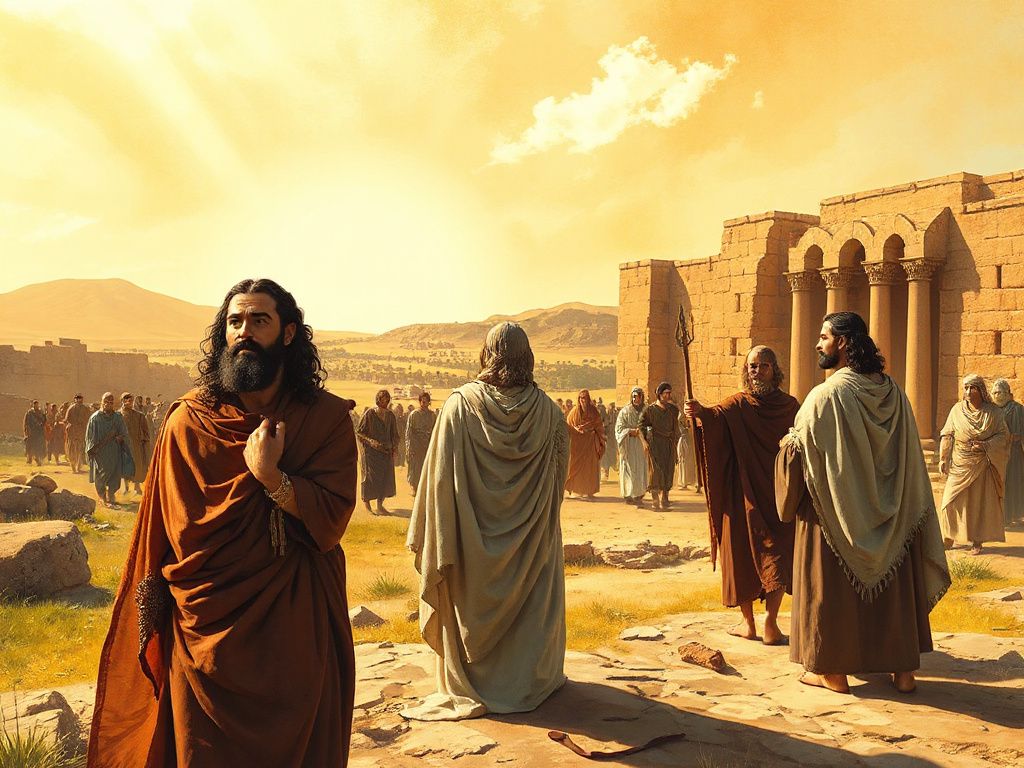
Israel repeatedly falls into sin and oppression, yet the Lord's compassion raises up judges to deliver them.
Judges
Choose a chapter
Pick a chapter and it opens in the Current chapter tab. Come back here whenever you want to choose another one.
Why this book was written
To show Israel that forsaking the Lord brings judgment and suffering, while repentance and crying out to Him brings merciful deliverance, and to lay the theological foundation for the later monarchy.
Structure
- 1–2Israel's Failure to Drive Out the Nations and the Prelude to the Judges
- 3–5Othniel, Ehud, and Deborah: The First Deliverance Cycle
- 6–9Gideon's Call, Warfare, and Abimelech's Usurpation
- 10–12Jair, Jephthah, and the Moral Decline of the Judges
- 13–16Samson's Nazirite Life and Tragic End
- 17–21Micah's Idolatry and the Benjamite Civil War: The 'Everyone Did What Was Right' Finale
Major themes
Cycles of Apostasy
Israel repeatedly falls away, suffers oppression, cries out, and is delivered (Judg 2:11-19; 3:7; 4:1; 6:1; 10:6; 13:1), revealing human depravity and relentless divine mercy.
Rise and Weakness of the Judges
From Othniel to Samson, the deliverers God raises are uneven, weak, and sometimes morally failing (Judg 17-18; 19-21), showing that only the Lord is the true Savior.
God's Sovereignty and Faithfulness
Even when the people break covenant, the Lord responds to their cries and uses unlikely judges (Judg 2:1, 16-18; 3:9, 15; 6:36), displaying His steadfast mercy and purpose.
Moral Chaos and 'No King' in Israel
The book ends with the repeated refrain 'In those days there was no king in Israel; everyone did what was right in his own eyes' (Judg 17:6; 18:1; 19:1; 21:25), exposing the chaos of life without godly authority.
Faith Alongside Weakness
Gideon's signs (Judg 6:36-40) and Samson's reckless vows (Judg 14-16) show that faith is often mingled with weakness, encouraging reliance on God rather than self.
How it points to Christ
Judges points to Christ by showing Israel trapped in sin's cycle and unable to save itself, crying out for a greater Deliverer—Jesus Christ, the true Judge and Savior (Acts 13:23), who offered a once-for-all sacrifice and conquered sin and death. Samson's final victory in death foreshadows Christ's triumph over the enemy (cf. Heb 7:25). The judges' weakness contrasts with Christ, the perfect Mediator, and the closing refrain 'no king in Israel' anticipates the coming Messianic King (Isa 9:6-7).
Key verses
- 2:10–11States the book's core cycle: a new generation forgets the Lord and does evil in His sight.
- 2:16The Lord raises up judges to deliver Israel, showing His persistent mercy.
- 2:21–23Explains why the nations remain: to test Israel's obedience to the Lord's ways.
- 6:12The Angel of the Lord calls Gideon a 'mighty warrior,' showing God's grace in weakness.
- 13:5Samson is set apart as a Nazirite from birth, foreshadowing the beginning and tragic end of deliverance.
- 17:6The theological refrain begins: Israel had no king; everyone did what was right in his own eyes.
- 21:25The book's closing refrain, pointing to Israel's need for a godly king to restore order.
Films & series on Judges
Each has a guide: scripture sources, where it departs from the Bible, discussion questions, and where to watch

Samson and Delilah
Film · 1949
When strongman Samson rejects the love of the beautiful Philistine woman Delilah, she seeks vengeance that brings horrible consequences they both regret.

Samson
Film · 2018
After losing the love of his life to a cruel Philistine prince, a young Hebrew with Supernatural strength defends his people, sacrificing everything to avenge his love, his people, and his God.
People in this book
Questions for reflection
- ·Have you experienced a Judges-like cycle in your own life—turning away, being oppressed, crying out, and returning? Where has the Lord shown deliverance?
- ·How does the weakness and incompleteness of the judges drive you to look to Christ, the perfect Savior and Mediator?
- ·When the text says 'In those days there was no king in Israel; everyone did what was right in his own eyes' (Judg 21:25), who reigns in your heart today? What truly directs your decisions?
- ·What does Gideon's twofold request for a sign (Judg 6:36-40) reveal about faith? How do you balance trust and assurance?
- ·The two appendices (Judg 17-18; 19-21) expose spiritual decay rather than deliverance—what warnings do they raise for you?
Want to read Judges start to finish? Open the reader for parallel Chinese/English text and ask anything as you go.
Start reading JudgesJudges
Chapter 1
1And it came to pass after the death of Joshua, that the children of Israel asked of Jehovah, saying, Who shall go up for us first against the Canaanites, to fight against them?
2And Jehovah said, Judah shall go up: behold, I have delivered the land into his hand.
3And Judah said unto Simeon his brother, Come up with me into my lot, that we may fight against the Canaanites; and I likewise will go with thee into thy lot. So Simeon went with him.
4And Judah went up; and Jehovah delivered the Canaanites and the Perizzites into their hand: and they smote of them in Bezek ten thousand men.
5And they found Adoni-bezek in Bezek; and they fought against him, and they smote the Canaanites and the Perizzites.
6But Adoni-bezek fled; and they pursued after him, and caught him, and cut off his thumbs and his great toes.
7And Adoni-bezek said, Threescore and ten kings, having their thumbs and their great toes cut off, gathered their food under my table: as I have done, so God hath requited me. And they brought him to Jerusalem, and he died there.
8And the children of Judah fought against Jerusalem, and took it, and smote it with the edge of the sword, and set the city on fire.
9And afterward the children of Judah went down to fight against the Canaanites that dwelt in the hill-country, and in the South, and in the lowland.
10And Judah went against the Canaanites that dwelt in Hebron (now the name of Hebron beforetime was Kiriath-arba); and they smote Sheshai, and Ahiman, and Talmai.
11And from thence he went against the inhabitants of Debir. (Now the name of Debir beforetime was Kiriath-sepher.)
12And Caleb said, He that smiteth Kiriath-sepher, and taketh it, to him will I give Achsah my daughter to wife.
13And Othniel the son of Kenaz, Caleb's younger brother, took it: and he gave him Achsah his daughter to wife.
14And it came to pass, when she came unto him, that she moved him to ask of her father a field: and she alighted from off her ass; and Caleb said unto her, What wouldest thou?
15And she said unto him, Give me a blessing; for that thou hast set me in the land of the South, give me also springs of water. And Caleb gave her the upper springs and the nether springs.
16And the children of the Kenite, Moses' brother-in-law, went up out of the city of palm-trees with the children of Judah into the wilderness of Judah, which is in the south of Arad; and they went and dwelt with the people.
17And Judah went with Simeon his brother, and they smote the Canaanites that inhabited Zephath, and utterly destroyed it. And the name of the city was called Hormah.
18Also Judah took Gaza with the border thereof, and Ashkelon with the border thereof, and Ekron with the border thereof.
19And Jehovah was with Judah; and drove out the inhabitants of the hill-country; for he could not drive out the inhabitants of the valley, because they had chariots of iron.
20And they gave Hebron unto Caleb, as Moses had spoken: and he drove out thence the three sons of Anak.
21And the children of Benjamin did not drive out the Jebusites that inhabited Jerusalem; but the Jebusites dwell with the children of Benjamin in Jerusalem unto this day.
22And the house of Joseph, they also went up against Beth-el; and Jehovah was with them.
23And the house of Joseph sent to spy out Beth-el. (Now the name of the city beforetime was Luz.)
24And the watchers saw a man come forth out of the city, and they said unto him, Show us, we pray thee, the entrance into the city, and we will deal kindly with thee.
25And he showed them the entrance into the city; and they smote the city with the edge of the sword; but they let the man go and all his family.
26And the man went into the land of the Hittites, and built a city, and called the name thereof Luz, which is the name thereof unto this day.
27And Manasseh did not drive out the inhabitants of Beth-shean and its towns, nor of Taanach and its towns, nor the inhabitants of Dor and its towns, nor the inhabitants of Ibleam and its towns, nor the inhabitants of Megiddo and its towns; but the Canaanites would dwell in that land.
28And it came to pass, when Israel was waxed strong, that they put the Canaanites to taskwork, and did not utterly drive them out.
29And Ephraim drove not out the Canaanites that dwelt in Gezer; but the Canaanites dwelt in Gezer among them.
30Zebulun drove not out the inhabitants of Kitron, nor the inhabitants of Nahalol; but the Canaanites dwelt among them, and became subject to taskwork.
31Asher drove not out the inhabitants of Acco, nor the inhabitants of Sidon, nor of Ahlab, nor of Achzib, nor of Helbah, nor of Aphik, nor of Rehob;
32but the Asherites dwelt among the Canaanites, the inhabitants of the land; for they did not drive them out.
33Naphtali drove not out the inhabitants of Beth-shemesh, nor the inhabitants of Beth-anath; but he dwelt among the Canaanites, the inhabitants of the land: nevertheless the inhabitants of Beth-shemesh and of Beth-anath became subject to taskwork.
34And the Amorites forced the children of Dan into the hill-country; for they would not suffer them to come down to the valley;
35but the Amorites would dwell in mount Heres, in Aijalon, and in Shaalbim: yet the hand of the house of Joseph prevailed, so that they became subject to taskwork.
36And the border of the Amorites was from the ascent of Akrabbim, from the rock, and upward.