BIBLE BOOK GUIDE
Judges
21 chapters
Israel repeatedly falls into sin and oppression, yet the Lord's compassion raises up judges to deliver them.
Judges
Choose a chapter
Pick a chapter and it opens in the Current chapter tab. Come back here whenever you want to choose another one.
Why this book was written
To show Israel that forsaking the Lord brings judgment and suffering, while repentance and crying out to Him brings merciful deliverance, and to lay the theological foundation for the later monarchy.
Structure
- 1–2Israel's Failure to Drive Out the Nations and the Prelude to the Judges
- 3–5Othniel, Ehud, and Deborah: The First Deliverance Cycle
- 6–9Gideon's Call, Warfare, and Abimelech's Usurpation
- 10–12Jair, Jephthah, and the Moral Decline of the Judges
- 13–16Samson's Nazirite Life and Tragic End
- 17–21Micah's Idolatry and the Benjamite Civil War: The 'Everyone Did What Was Right' Finale
Major themes
Cycles of Apostasy
Israel repeatedly falls away, suffers oppression, cries out, and is delivered (Judg 2:11-19; 3:7; 4:1; 6:1; 10:6; 13:1), revealing human depravity and relentless divine mercy.
Rise and Weakness of the Judges
From Othniel to Samson, the deliverers God raises are uneven, weak, and sometimes morally failing (Judg 17-18; 19-21), showing that only the Lord is the true Savior.
God's Sovereignty and Faithfulness
Even when the people break covenant, the Lord responds to their cries and uses unlikely judges (Judg 2:1, 16-18; 3:9, 15; 6:36), displaying His steadfast mercy and purpose.
Moral Chaos and 'No King' in Israel
The book ends with the repeated refrain 'In those days there was no king in Israel; everyone did what was right in his own eyes' (Judg 17:6; 18:1; 19:1; 21:25), exposing the chaos of life without godly authority.
Faith Alongside Weakness
Gideon's signs (Judg 6:36-40) and Samson's reckless vows (Judg 14-16) show that faith is often mingled with weakness, encouraging reliance on God rather than self.
How it points to Christ
Judges points to Christ by showing Israel trapped in sin's cycle and unable to save itself, crying out for a greater Deliverer—Jesus Christ, the true Judge and Savior (Acts 13:23), who offered a once-for-all sacrifice and conquered sin and death. Samson's final victory in death foreshadows Christ's triumph over the enemy (cf. Heb 7:25). The judges' weakness contrasts with Christ, the perfect Mediator, and the closing refrain 'no king in Israel' anticipates the coming Messianic King (Isa 9:6-7).
Key verses
- 2:10–11States the book's core cycle: a new generation forgets the Lord and does evil in His sight.
- 2:16The Lord raises up judges to deliver Israel, showing His persistent mercy.
- 2:21–23Explains why the nations remain: to test Israel's obedience to the Lord's ways.
- 6:12The Angel of the Lord calls Gideon a 'mighty warrior,' showing God's grace in weakness.
- 13:5Samson is set apart as a Nazirite from birth, foreshadowing the beginning and tragic end of deliverance.
- 17:6The theological refrain begins: Israel had no king; everyone did what was right in his own eyes.
- 21:25The book's closing refrain, pointing to Israel's need for a godly king to restore order.
Films & series on Judges
Each has a guide: scripture sources, where it departs from the Bible, discussion questions, and where to watch
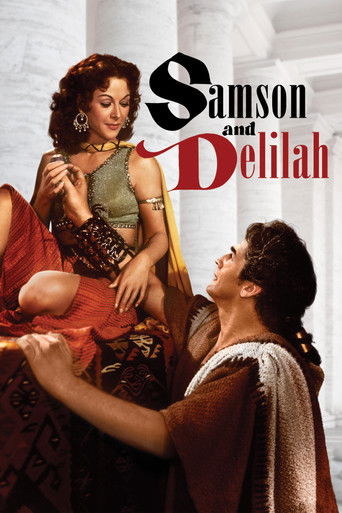
Samson and Delilah
Film · 1949
When strongman Samson rejects the love of the beautiful Philistine woman Delilah, she seeks vengeance that brings horrible consequences they both regret.
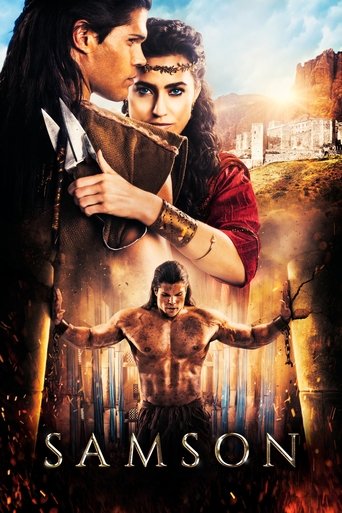
Samson
Film · 2018
After losing the love of his life to a cruel Philistine prince, a young Hebrew with Supernatural strength defends his people, sacrificing everything to avenge his love, his people, and his God.
People in this book
Questions for reflection
- ·Have you experienced a Judges-like cycle in your own life—turning away, being oppressed, crying out, and returning? Where has the Lord shown deliverance?
- ·How does the weakness and incompleteness of the judges drive you to look to Christ, the perfect Savior and Mediator?
- ·When the text says 'In those days there was no king in Israel; everyone did what was right in his own eyes' (Judg 21:25), who reigns in your heart today? What truly directs your decisions?
- ·What does Gideon's twofold request for a sign (Judg 6:36-40) reveal about faith? How do you balance trust and assurance?
- ·The two appendices (Judg 17-18; 19-21) expose spiritual decay rather than deliverance—what warnings do they raise for you?
Want to read Judges start to finish? Open the reader for parallel Chinese/English text and ask anything as you go.
Start reading JudgesJudges
Chapter 8
1And the men of Ephraim said unto him, Why hast thou served us thus, that thou calledst us not, when thou wentest to fight with Midian? And they did chide with him sharply.
2And he said unto them, What have I now done in comparison with you? Is not the gleaning of the grapes of Ephraim better than the vintage of Abiezer?
3God hath delivered into your hand the princes of Midian, Oreb and Zeeb: and what was I able to do in comparison with you? Then their anger was abated toward him, when he had said that.
4And Gideon came to the Jordan, and passed over, he, and the three hundred men that were with him, faint, yet pursuing.
5And he said unto the men of Succoth, Give, I pray you, loaves of bread unto the people that follow me; for they are faint, and I am pursuing after Zebah and Zalmunna, the kings of Midian.
6And the princes of Succoth said, Are the hands of Zebah and Zalmunna now in thy hand, that we should give bread unto thine army?
7And Gideon said, Therefore when Jehovah hath delivered Zebah and Zalmunna into my hand, then I will tear your flesh with the thorns of the wilderness and with briers.
8And he went up thence to Penuel, and spake unto them in like manner; and the men of Penuel answered him as the men of Succoth had answered.
9And he spake also unto the men of Penuel, saying, When I come again in peace, I will break down this tower.
10Now Zebah and Zalmunna were in Karkor, and their hosts with them, about fifteen thousand men, all that were left of all the host of the children of the east; for there fell a hundred and twenty thousand men that drew sword.
11And Gideon went up by the way of them that dwelt in tents on the east of Nobah and Jogbehah, and smote the host; for the host was secure.
12And Zebah and Zalmunna fled; and he pursued after them; and he took the two kings of Midian, Zebah and Zalmunna, and discomfited all the host.
13And Gideon the son of Joash returned from the battle from the ascent of Heres.
14And he caught a young man of the men of Succoth, and inquired of him: and he described for him the princes of Succoth, and the elders thereof, seventy and seven men.
15And he came unto the men of Succoth, and said, Behold Zebah and Zalmunna, concerning whom ye did taunt me, saying, Are the hands of Zebah and Zalmunna now in thy hand, that we should give bread unto thy men that are weary?
16And he took the elders of the city, and thorns of the wilderness and briers, and with them he taught the men of Succoth.
17And he brake down the tower of Penuel, and slew the men of the city.
18Then said he unto Zebah and Zalmunna, What manner of men were they whom ye slew at Tabor? And they answered, As thou art, so were they; each one resembled the children of a king.
19And he said, They were my brethren, the sons of my mother: as Jehovah liveth, if ye had saved them alive, I would not slay you.
20And he said unto Jether his first-born, Up, and slay them. But the youth drew not his sword; for he feared, because he was yet a youth.
21Then Zebah and Zalmunna said, Rise thou, and fall upon us; for as the man is, so is his strength. And Gideon arose, and slew Zebah and Zalmunna, and took the crescents that were on their camels' necks.
22Then the men of Israel said unto Gideon, Rule thou over us, both thou, and thy son, and thy son's son also; for thou hast saved us out of the hand of Midian.
23And Gideon said unto them, I will not rule over you, neither shall my son rule over you: Jehovah shall rule over you.
24And Gideon said unto them, I would make a request of you, that ye would give me every man the ear-rings of his spoil. (For they had golden ear-rings, because they were Ishmaelites.)
25And they answered, We will willingly give them. And they spread a garment, and did cast therein every man the ear-rings of his spoil.
26And the weight of the golden ear-rings that he requested was a thousand and seven hundred shekels of gold, besides the crescents, and the pendants, and the purple raiment that was on the kings of Midian, and besides the chains that were about their camels' necks.
27And Gideon made an ephod thereof, and put it in his city, even in Ophrah: and all Israel played the harlot after it there; and it became a snare unto Gideon, and to his house.
28So Midian was subdued before the children of Israel, and they lifted up their heads no more. And the land had rest forty years in the days of Gideon.
29And Jerubbaal the son of Joash went and dwelt in his own house.
30And Gideon had threescore and ten sons of his body begotten; for he had many wives.
31And his concubine that was in Shechem, she also bare him a son, and he called his name Abimelech.
32And Gideon the son of Joash died in a good old age, and was buried in the sepulchre of Joash his father, in Ophrah of the Abiezrites.
33And it came to pass, as soon as Gideon was dead, that the children of Israel turned again, and played the harlot after the Baalim, and made Baal-berith their god.
34And the children of Israel remembered not Jehovah their God, who had delivered them out of the hand of all their enemies on every side;
35neither showed they kindness to the house of Jerubbaal, who is Gideon, according to all the goodness which he had showed unto Israel.