Filter by Era
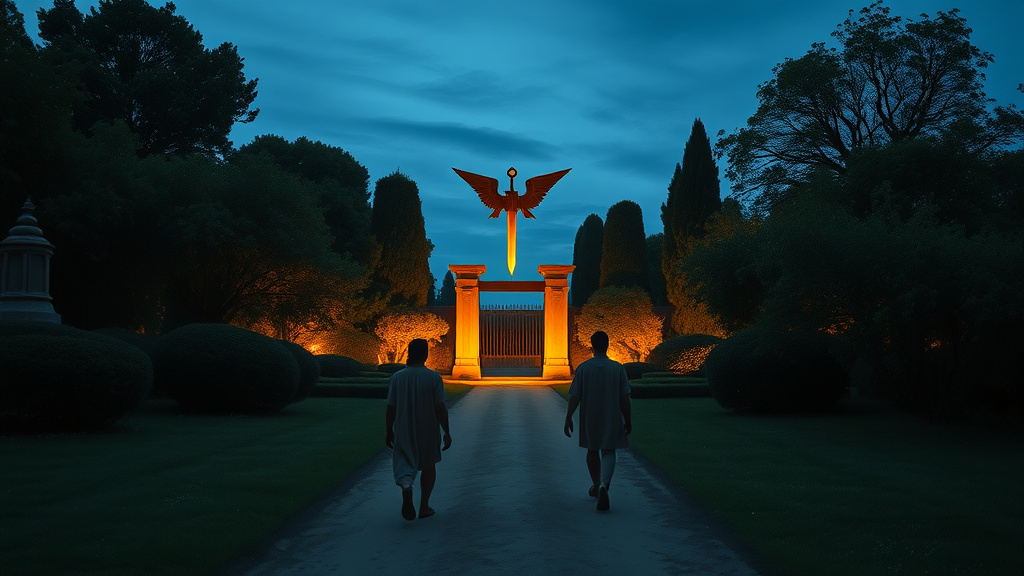
Genesis 3
Genesis · Ch.3
The Day the Garden Closed
Genesis 4:18
protestant「And unto Enoch was born Irad: and Irad begat Mehujael; and Mehujael begat Methushael; and Methushael begat Lamech.」
Test
allHebrew verb meaning 'to test, try, or prove,' describing God's proving of Abraham's faith. It signifies a refining trial that strengthens devotion, distinct from solicitations to sin.
How does Catholic exegesis understand the symbolism in Joseph's dreams?
Catholic biblical theology on the symbolic meaning of Joseph's dream narratives.
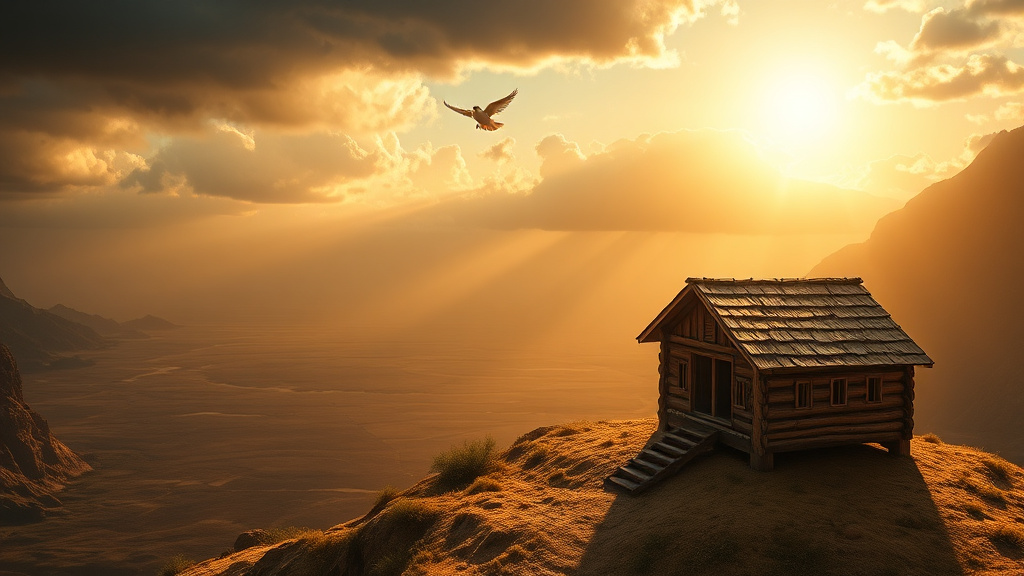
Genesis 6
Genesis · Ch.6
The Waters That Washed the World
Genesis 50:16
protestant「And they sent a message unto Joseph, saying, Thy father did command before he died, saying,」
Alien Gods
allForeign pagan deities and idols opposed to Israel's one true God, which must be completely removed to maintain the purity of covenantal faith.
Scripture says 'there was evening and there was morning' — why does the day begin with evening?
From evening to morning — how does this rhythm shape the meaning of the created day?
Genesis 14:14
judaism「When Abram heard that his kinsman had been taken captive, he mustered his retainers, uncertain. born into his household, numbering three hundred and eighteen, and went in pursuit as far as Dan.」
Offering
allCain brought fruit of the ground while Abel offered the firstlings and fat. This early account foreshadows the sacrificial system, showing that acceptable worship requires faith and a worthy offering.
Why does Genesis 1:26 use the plural 'Let us make man in our image'?
The singular Creator speaks in plural—an ancient puzzle inviting reflection.
Genesis 29:2
protestant「And he looked, and, behold, a well in the field, and, lo, three flocks of sheep lying there by it; for out of that well they watered the flocks: and the stone upon the well's mouth was great.」
Land of Moriah
allThe region where Abraham offered Isaac, later identified as the mountain where Solomon built the Temple. Prefigures Jerusalem as the center of true worship.
Do Joseph's dreams reveal God's sovereign providence?
Reformed theology on dreams and divine providence in Genesis 37-50.
Genesis 10:17
judaism「the Hivites, the Arkites, the Sinites,」
Living Soul
allWhen God breathed the breath of life into Adam's nostrils, he became a "living soul," signifying humanity's unique union of earthly body and divinely given spiritual life.
Why did God intervene at the last moment to stop Abraham from sacrificing Isaac?
What does God's intervention reveal about His heart regarding sacrifice and obedience?
Genesis 44:4
protestant「And when they were gone out of the city, and were not yet far off, Joseph said unto his steward, Up, follow after the men; and when thou dost overtake them, say unto them, Wherefore have ye rewarded evil for good?」
Dreams
allGod reveals His will through dreams; the cupbearer, baker, and Pharaoh each receive divine visions later interpreted by Joseph.
Why does Genesis 1:26 use the plural "Let us" in "Let us make man in our image"?
Trinity, majestic plural, or divine council? A linguistic mystery in ancient text.
Genesis 30:6
protestant「And Rachel said, God hath judged me, and hath also heard my voice, and hath given me a son: therefore called she his name Dan.」
Inherit the Land
allInheriting the promised land given by God, a core element of the Abrahamic covenant pointing to spiritual inheritance.
Why does the creation account in Genesis describe humanity as being made in the image of God, and what does that mean for how we treat one another?
Genesis 1:26-27 gives every human being a profound dignity. Join the conversation about what it means in practice.
Genesis 2:8
protestant「And Jehovah God planted a garden eastward, in Eden; and there he put the man whom he had formed.」
Sin Against God
allJoseph's pivotal confession when refusing Potiphar's wife, showing that sin's essence is transgression against God, not merely harm to others.
How does being made in the image of God define human dignity?
Genesis 1:26 lays the foundation for a shared view of humanity across Judaism, Catholicism, and Protestantism.
Genesis 38:1
protestant「And it came to pass at that time, that Judah went down from his brethren, and turned in to a certain Adullamite, whose name was Hirah.」
Walking with God
allAn intimate Hebrew idiom depicting Noah's continual, obedient fellowship with God—the highest commendation of steadfast faith in the Old Testament.
Why does the creation account in Genesis describe humanity as being made in the image of God, and what does that mean for how we treat one another?
Genesis 1:26-27 gives every human being a profound dignity. Join the conversation about what it means in practice.
Genesis 49:17
protestant「Dan shall be a serpent in the way, An adder in the path, That biteth the horse's heels, So that his rider falleth backward.」
Edom
allThe nation descended from Esau, with a complex fraternal relationship with Israel; frequently mentioned in Scripture as an object of divine judgment.
How do rabbinic traditions interpret Joseph's sheaves dream?
The sheaf imagery in Hebrew Scripture as foreshadowing of family reversal.
Genesis 27:2
protestant「And he said, Behold now, I am old, I know not the day of my death.」
God Almighty
allThe divine name El Shaddai, meaning 'God Almighty,' emphasizing God's sufficiency and power to fulfill His promises to Abraham.
Why did God form Adam before entrusting him with the responsibilities of the garden?
The order of events reveals the Creator's trust and commission for the creature.
Genesis 6:9
protestant「These are the generations of Noah. Noah was a righteous man, and perfect in his generations: Noah walked with God.」
Image of God
allHumanity created in God's image, the theological foundation for human dignity and the inviolability of human life, establishing the prohibition against murder.
What is the symbolic difference between the tree of life and the tree of the knowledge of good and evil in Eden?
Two trees stood side by side in the garden, yet pointed to very different destinies.
Genesis 45:8
protestant「So now it was not you that sent me hither, but God: and he hath made me a father to Pharaoh, and lord of all his house, and ruler over all the land of Egypt.」
Image of God
allHumanity created in God's image, conferring inherent dignity and sacred value that grounds the prohibition against shedding human blood.
How does Midrash elaborate on the eleven stars in the celestial dream?
Rich rabbinic elaboration on eleven stars representing eleven brothers.
Genesis 12:17
judaism「But GOD afflicted Pharaoh and his household with mighty plagues on account of Sarai, the wife of Abram.」
Visitation
allGod's purposeful intervention to fulfill His promises. The LORD visited Sarah as He had said, enabling her to bear Isaac.
Why did God rest on the seventh day from all His work—does this imply God grows weary?
Genesis 2:2 says God rested on the seventh day—but how is His rest different from human fatigue?
Genesis 7:1
protestant「And Jehovah said unto Noah, Come thou and all thy house into the ark; for thee have I seen righteous before me in this generation.」
Seed/Offspring
allGod's pivotal promise to Abraham that He will give this land to his descendants. In the New Testament, it culminates in Christ as the singular 'Seed' who inherits the promise.
How does the 'each according to its kind' principle of the six days shape our understanding of the created order?
Genesis repeatedly mentions 'each according to its kind,' laying a theological foundation for order and boundaries in creation.
Genesis 15:18
protestant「In that day Jehovah made a covenant with Abram, saying, Unto thy seed have I given this land, from the river of Egypt unto the great river, the river Euphrates:」
Sin Crouching at the Door
allGod's personification of sin as a crouching beast at the door, desiring to devour but to be mastered by the one who rules over it, depicting sin's power and the believer's struggle.
How does rabbinic tradition interpret the theological significance of separating 'light from darkness' on the first day?
Rabbinic literature often sees the separation of light and darkness as the first foreshadowing of moral discernment.
Genesis 45:5
judaism「Now, do not be distressed or reproach yourselves because you sold me hither; it was to save life that God sent me ahead of you.」
Light
allGod's first creative act, signifying truth's triumph over darkness and prefiguring Christ as the Light of the world (John 1).
How does Catholic tradition understand the symbolic meaning of 'light and darkness' on the first day?
How did the Church Fathers connect the first day's separation of light and darkness with Christ as the Light of the World?
Genesis 31:8
protestant「If he said thus, The speckled shall be thy wages; then all the flock bare speckled: and if he said thus, The ringstreaked shall be thy wages; then bare all the flock ringstreaked.」
Tree of Knowledge of Good and Bad
allThe forbidden tree representing a domain of moral sovereignty reserved by God; eating it symbolizes humanity's overstepping into autonomous moral judgment.
What does being created in God's image mean?
Exploring what it means to bear the image of God according to Genesis 1:26 and its implications for human dignity.
Genesis 13:4
protestant「unto the place of the altar, which he had made there at the first: and there Abram called on the name of Jehovah.」
Spirit of God
allThe divine Spirit hovering over the waters at creation, prefiguring the Spirit's active role in creation, revelation, and redemption.
Why did God form Adam before entrusting him with the responsibilities of the garden?
The order of events reveals the Creator's trust and commission for the creature.
Genesis 41:3
judaism「But presently, seven other cows came up from the Nile close behind them, ugly and gaunt, and stood beside the cows on the bank of the Nile;」
Sodom
allAn ancient city destroyed by God for its grave wickedness, serving as the archetypal symbol of divine judgment and moral corruption throughout Scripture.
How does the image of God define humanity?
Exploring the deep meaning of being created in God's image
Genesis 34:4
protestant「And Shechem spake unto his father Hamor, saying, Get me this damsel to wife.」
Formless and Void
allDescribes the primeval state of the earth as formless, empty, and unordered—awaiting God's ordering word, not utter nothingness.
How does rabbinic tradition interpret the dual meaning of 'avad and shamar' in the garden commission?
Talmudic tradition reads this verse as a dual duty of labor and observance.
Genesis 37:8
protestant「And his brethren said to him, Shalt thou indeed reign over us? or shalt thou indeed have dominion over us? And they hated him yet the more for his dreams, and for his words.」
Image of God
allThe divine imprint unique to humanity, providing the theological basis for the sanctity of human life, human dignity, and equality before the law.
How does Jewish tradition interpret Abraham's internal struggle and faith during the Akedah?
What do rabbinic writings say about Abraham's emotional journey as he traveled toward Moriah?
Genesis 22:10
protestant「And Abraham stretched forth his hand, and took the knife to slay his son.」
The Place of God
allJacob's retort 'Can I take the place of God?' — a profound confession that fertility and life belong to God alone, not to human effort or negotiation.
What does the institution of Sabbath teach about modern life?
God rested on day seven—is rest the crown of creation, or simply equal to work?
Genesis 12:5
protestant「And Abram took Sarai his wife, and Lot his brother's son, and all their substance that they had gathered, and the souls that they had gotten in Haran; and they went forth to go into the land of Canaan; and into the land of Canaan they came.」
Israel
allThe new name God gave to Jacob, meaning 'he who struggles with God' or 'God rules,' marking a pivotal transition in identity and founding the nation of Israel.
Did God's 'rest' on the seventh day mean He ceased working, or is He still actively sustaining all things?
The 'rest' of Genesis 2:2 is often misunderstood as cessation, prompting deeper theological inquiry.