BIBLE BOOK GUIDE
Isaiah
66 chapters
Though Israel will be judged for sin, YHWH will redeem His people through the Suffering Servant and the coming kingdom, revealing His holiness and sovereign rule.
Isaiah
Choose a chapter
Pick a chapter and it opens in the Current chapter tab. Come back here whenever you want to choose another one.
Why this book was written
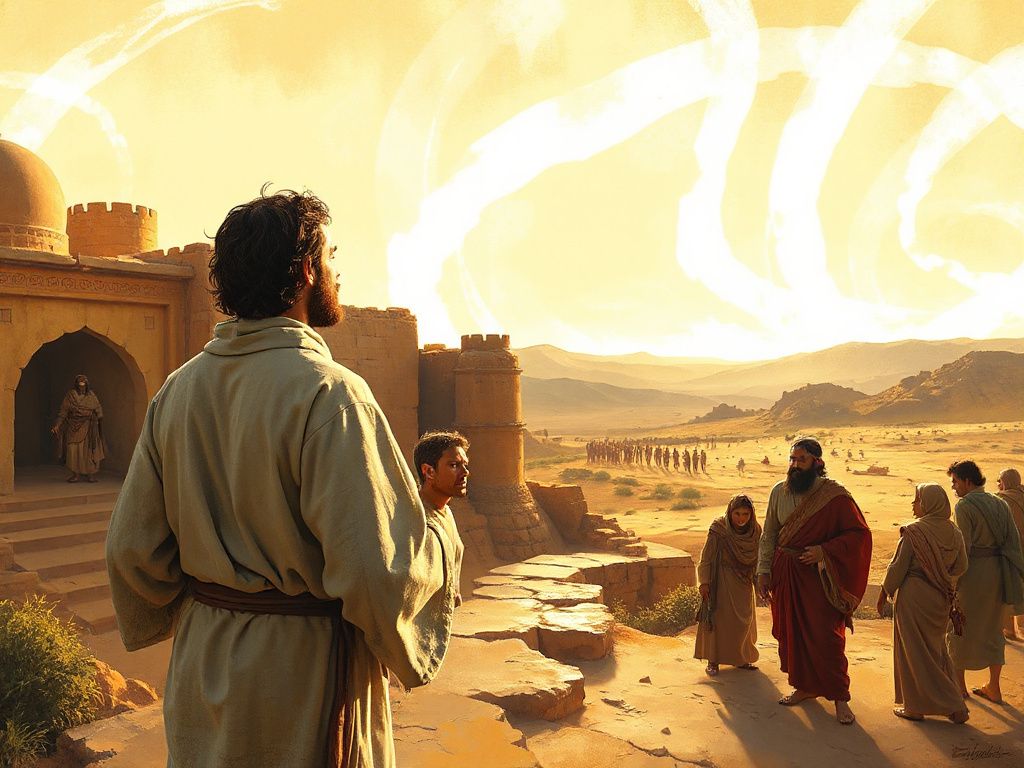
Written in the context of Assyrian threats and spiritual decline in Judah, Isaiah proclaims to the people of Judah and Jerusalem God's message of judgment and salvation, calling them to repentance and anchoring their hope in the promised messianic kingdom.
Structure
- 1–12Judgment and the Call to Repentance
- 13–27Oracles against the Nations and Zion's Hope
- 28–39Warnings, Comfort, and Historical Turning Point
- 40–55The Suffering Servant and the Promise of Redemption
- 56–66New Exodus and the New Heavens and New Earth
Major themes
The Holiness and Sovereignty of YHWH
Isaiah 6 records the seraphim crying 'Holy, holy, holy,' revealing that God's holiness far exceeds human sinfulness. The book repeatedly declares God enthroned over the nations, with both judgment and salvation flowing from His sovereign will.
Judgment and Mercy Side by Side
The prophet announces God's judgment on Israel and the nations (ch. 1-23), but after judgment comes comfort and salvation (ch. 40-66). God is a refining fire and a compassionate Father; His righteousness and mercy interweave throughout history.
The Suffering Servant and Redemption
Isaiah 52:13-53:12 portrays a sinless Servant who suffers as a substitute, wounded so that many are healed, crushed so that many are counted righteous. This Servant accomplishes the true atoning sacrifice, the redemptive climax of the book.
The Remnant and Covenant Promises
Though judgment will destroy the many, God will preserve a remnant for Himself (6:13; 10:20-22). He remembers the covenant with David, promising a righteous Branch who will reign on His throne forever (9:7; 11:1-10).
New Heavens, New Earth, and Ultimate Hope
The closing chapters (65-66) envision God creating new heavens and a new earth, Jerusalem becoming a city of joy, and death forever swallowed up. All flesh will come to worship God, inspiring eschatological hope for every generation of saints.
How it points to Christ
Isaiah points to Christ from many angles: the virgin-born 'Immanuel' (7:14; 9:6) is God incarnate; the Branch of Jesse (11:1-10) is the righteous King of peace; the Suffering Servant of chapter 53 dies as the sinless substitute, is wounded for our transgressions, and rises in triumph, accomplishing the true atonement; finally God dwells with His people in the new heavens and new earth (65:17-25), pointing to the complete redemption at Christ's return. The book functions as a portrait gallery of the Messiah, prefiguring Christ's person, work, and kingdom.
Key verses
- 6:3'Holy, holy, holy' — establishes the theme of God's holiness and glory that runs through the whole book.
- 9:6Foretells a child born unto us who is Wonderful Counselor, Mighty God, Everlasting Father, Prince of Peace.
- 53:5–6The Suffering Servant pierced for our transgressions and wounded for our healing — the heart of Isaiah's redemptive message.
- 40:31Those who wait on the LORD will renew their strength — a promise to sustain faith through exile and beyond.
- 53:11The righteous Servant will justify many, bearing their iniquities.
- 55:6–7Seek the LORD while He may be found — an urgent call to repentance as the invitation to redemption.
- 65:17God is creating new heavens and a new earth — the climax of eschatological hope in the book.
- 1:18'Though your sins are like scarlet, they shall be as white as snow' — the gospel invitation of grace and forgiveness.
Reflections on Isaiah
People in this book
Questions for reflection
- ·When you read Isaiah 6, how does the vision of God's holiness expose your own sin, and what does it mean for you to be cleansed by the altar coal so you can be sent to serve?
- ·How do passages like Isaiah 9:6-7 and 11:1-10 deepen your worship of Christ as both mighty God and everlasting Father, gentle Branch of Jesse?
- ·Isaiah 53 says the Servant was 'wounded for our transgressions.' How should this shape the way you understand your own worth, guilt, and forgiveness today?
- ·Israel heard 'Though your sins are like scarlet, they shall be as white as snow' (1:18). What 'scarlet' sins or habits do you need to bring before the Lord for cleansing?
- ·Isaiah 43:1-7 says 'Do not fear, for I have redeemed you.' In what current situations do you need to lay hold of this promise and trust God's presence?
Want to read Isaiah start to finish? Open the reader for parallel Chinese/English text and ask anything as you go.
Start reading IsaiahIsaiah
Chapter 55
1Ho, every one that thirsteth, come ye to the waters, and he that hath no money; come ye, buy, and eat; yea, come, buy wine and milk without money and without price.
2Wherefore do ye spend money for that which is not bread? and your labor for that which satisfieth not? hearken diligently unto me, and eat ye that which is good, and let your soul delight itself in fatness.
3Incline your ear, and come unto me; hear, and your soul shall live: and I will make an everlasting covenant with you, even the sure mercies of David.
4Behold, I have given him for a witness to the peoples, a leader and commander to the peoples.
5Behold, thou shalt call a nation that thou knowest not; and a nation that knew not thee shall run unto thee, because of Jehovah thy God, and for the Holy One of Israel; for he hath glorified thee.
6Seek ye Jehovah while he may be found; call ye upon him while he is near:
7let the wicked forsake his way, and the unrighteous man his thoughts; and let him return unto Jehovah, and he will have mercy upon him; and to our God, for he will abundantly pardon.
8For my thoughts are not your thoughts, neither are your ways my ways, saith Jehovah.
9For as the heavens are higher than the earth, so are my ways higher than your ways, and my thoughts than your thoughts.
10For as the rain cometh down and the snow from heaven, and returneth not thither, but watereth the earth, and maketh it bring forth and bud, and giveth seed to the sower and bread to the eater;
11so shall my word be that goeth forth out of my mouth: it shall not return unto me void, but it shall accomplish that which I please, and it shall prosper in the thing whereto I sent it.
12For ye shall go out with joy, and be led forth with peace: the mountains and the hills shall break forth before you into singing; and all the trees of the fields shall clap their hands.
13Instead of the thorn shall come up the fir-tree; and instead of the brier shall come up the myrtle-tree: and it shall be to Jehovah for a name, for an everlasting sign that shall not be cut off.