BIBLE BOOK GUIDE
Jeremiah
52 chapters
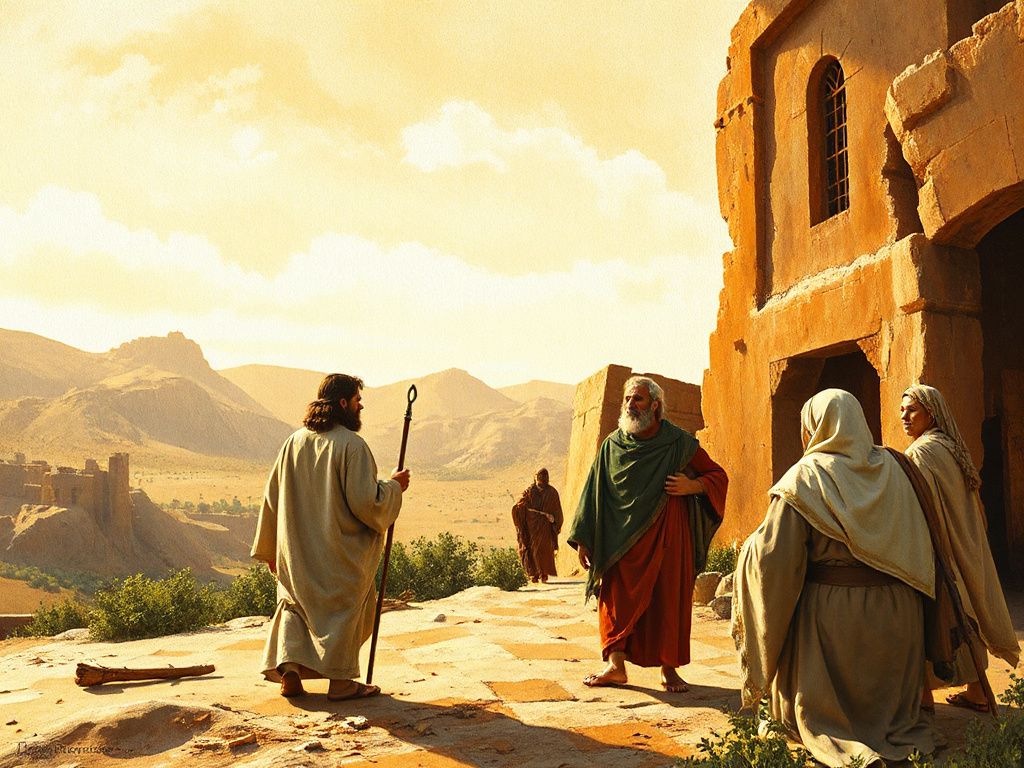
Jeremiah is the word of the Lord spoken through the prophet before and after Judah's fall, proclaiming judgment for unfaithfulness and mercy through a coming new covenant and ultimate restoration.
Jeremiah
Choose a chapter
Pick a chapter and it opens in the Current chapter tab. Come back here whenever you want to choose another one.
Why this book was written
Written during the final decades of Judah (c. 627–586 BC) and addressed to Judeans before and after the exile, Jeremiah warns that persistent covenant unfaithfulness and idolatry will bring Babylonian judgment. Through laments and personal confession he expresses God's broken heart, while pointing forward to forgiveness, restoration, the New Covenant, the Messianic reign, and the nations' future—all to call hopeless hearers to trust in the Lord's faithfulness.
Structure
- 1–20The Lord Calls Through Jeremiah and Pronounces Judgment
- 21–29Kings, False Prophets, and the People's Rebellion
- 30–33Restoration, the New Covenant, and the Coming Messiah
- 34–45Faithfulness and Struggle in the Final Years
- 46–51Oracles Against the Nations
- 52Appendix: The Fall of Jerusalem and Lasting Hope
Major themes
Judgment and Justice
Jeremiah proclaims that Judah will face Babylonian judgment for covenant unfaithfulness, idolatry, and injustice (Jer 4:5-31; 21:1-14). God's righteousness demands that sin be punished.
New Covenant and Renewal
Amid judgment, God promises a new covenant, writing His law on hearts and forgiving iniquity (Jer 31:31-34). This new covenant points to a more complete redemption and inner renewal.
Prophetic Mission and Suffering
Jeremiah is called to be a prophet to the nations (Jer 1:5) yet endures rejection, persecution, and inner anguish (Jer 11:18-23; 20:7-18), revealing the cost of faithfulness to God's word.
Repentance and Return
God repeatedly calls His people to repent and return, saying 'Return, thou backsliding Israel' (Jer 3:12-14; 25:5-6), revealing His merciful desire that they turn back to Him.
God's Faithfulness and Sovereignty
Despite Israel's unfaithfulness, God remains faithful to His covenants with Abraham and David (Jer 33:14-26) and sovereign over history, even using Babylon as an instrument of judgment (Jer 25:9-11).
Hope and Restoration
In the shadow of exile, God promises to redeem a remnant from the north, restore them to their land, and raise up a righteous Branch (Jer 23:5-6; 30:10-11; 32:36-44).
How it points to Christ
Jeremiah points to Christ in several ways: (1) The 'Righteous Branch' of Jer 23:5-6, a Davidic King who reigns in righteousness, applied in the New Testament to Jesus (Luke 1:68-79); (2) The 'New Covenant' of Jer 31:31-34 is applied in Hebrews 8-10 to Christ, who establishes it by His own blood and secures full forgiveness of sins; (3) Jeremiah as the 'weeping prophet' prefigures Christ's grief and rejection (Luke 19:41-44); (4) Jeremiah's being cast into the cistern and delivered (Jer 38) foreshadows Christ's death and resurrection. The whole book anticipates the Messiah who fulfills redemption and brings the new covenant to fruition.
Key verses
- 1:5The Lord appointed Jeremiah as a prophet to the nations before birth, grounding the book's prophetic mission.
- 9:23–24True boasting is not in wisdom, power, or wealth, but in knowing the Lord and practicing justice and righteousness.
- 23:5–6The messianic promise of 'the Lord Our Righteous Savior' anchors the book's hope.
- 29:11–13God's plans for peace and a future call the exiles to seek Him in prayer while they wait.
- 31:31–34The New Covenant promise—law written on hearts, forgiveness of sin, intimate knowledge of God—is a key OT text for NT theology.
- 33:2The Lord pledges by His own name to fulfill His word of salvation and restoration.
- 45:5God promises to preserve the faithful scribe Baruch, encouraging all who follow Him through crisis.
- 52:31–34The book closes with Jehoiachin's elevation, echoing the promise of restored Davidic rule and leaving a spark of hope.
Films & series on Jeremiah
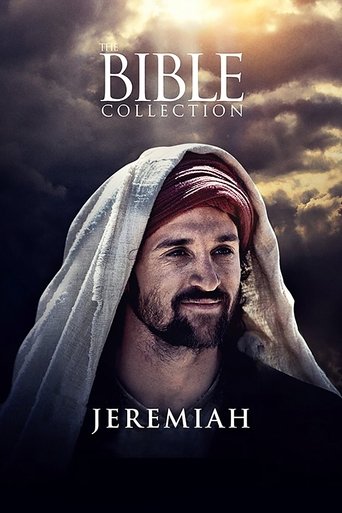
Each has a guide: scripture sources, where it departs from the Bible, discussion questions, and where to watch
Reflections on Jeremiah
People in this book
Questions for reflection
- ·Jeremiah in Jer 20:7-9 laments being mocked yet unable to stop speaking God's word. How does this challenge me to choose between faithfulness to truth and being well-liked in my own walk of faith?
- ·God promises in Jer 31:31-34 to write His law on hearts, not on tablets of stone. What does this teach me about the gospel as inward renewal rather than mere external compliance?
- ·Israel repeatedly ignored God's call to repent through the prophets (Jer 25:3-7). Do I likewise harden my heart when God prompts me through Scripture, the Spirit, or fellow believers?
- ·God declares, 'I know the thoughts that I think toward you, thoughts of peace, and not of evil' (Jer 29:11). In difficulty or disappointment, how can I more faithfully hold on to this promise of the God of peace?
- ·Jeremiah weeps and intercedes for his people (Jer 9:1; 14:7-9). How does this stir me to intercede with tears for those who do not yet know God—my family, neighbors, and others?
Want to read Jeremiah start to finish? Open the reader for parallel Chinese/English text and ask anything as you go.
Start reading JeremiahJeremiah
Chapter 17
1The sin of Judah is written with a pen of iron, and with the point of a diamond: it is graven upon the tablet of their heart, and upon the horns of your altars;
2whilst their children remember their altars and their Asherim by the green trees upon the high hills.
3O my mountain in the field, I will give thy substance and all thy treasures for a spoil, and thy high places, because of sin, throughout all thy borders.
4And thou, even of thyself, shalt discontinue from thy heritage that I gave thee; and I will cause thee to serve thine enemies in the land which thou knowest not: for ye have kindled a fire in mine anger which shall burn for ever.
5Thus saith Jehovah: Cursed is the man that trusteth in man, and maketh flesh his arm, and whose heart departeth from Jehovah.
6For he shall be like the heath in the desert, and shall not see when good cometh, but shall inhabit the parched places in the wilderness, a salt land and not inhabited.
7Blessed is the man that trusteth in Jehovah, and whose trust Jehovah is.
8For he shall be as a tree planted by the waters, that spreadeth out its roots by the river, and shall not fear when heat cometh, but its leaf shall be green; and shall not be careful in the year of drought, neither shall cease from yielding fruit.
9The heart is deceitful above all things, and it is exceedingly corrupt: who can know it?
10I, Jehovah, search the mind, I try the heart, even to give every man according to his ways, according to the fruit of his doings.
11As the partridge that sitteth on eggs which she hath not laid, so is he that getteth riches, and not by right; in the midst of his days they shall leave him, and at his end he shall be a fool.
12A glorious throne, set on high from the beginning, is the place of our sanctuary.
13O Jehovah, the hope of Israel, all that forsake thee shall be put to shame. They that depart from me shall be written in the earth, because they have forsaken Jehovah, the fountain of living waters.
14Heal me, O Jehovah, and I shall be healed; save me, and I shall be saved: for thou art my praise.
15Behold, they say unto me, Where is the word of Jehovah? let it come now.
16As for me, I have not hastened from being a shepherd after thee; neither have I desired the woeful day; thou knowest: that which came out of my lips was before thy face.
17Be not a terror unto me: thou art my refuge in the day of evil.
18Let them be put to shame that persecute me, but let not me be put to shame; let them be dismayed, but let not me be dismayed; bring upon them the day of evil, and destroy them with double destruction.
19Thus said Jehovah unto me: Go, and stand in the gate of the children of the people, whereby the kings of Judah come in, and by which they go out, and in all the gates of Jerusalem;
20and say unto them, Hear ye the word of Jehovah, ye kings of Judah, and all Judah, and all the inhabitants of Jerusalem, that enter in by these gates:
21Thus saith Jehovah, Take heed to yourselves, and bear no burden on the sabbath day, nor bring it in by the gates of Jerusalem;
22neither carry forth a burden out of your houses on the sabbath day, neither do ye any work: but hallow ye the sabbath day, as I commanded your fathers.
23But they hearkened not, neither inclined their ear, but made their neck stiff, that they might not hear, and might not receive instruction.
24And it shall come to pass, if ye diligently hearken unto me, saith Jehovah, to bring in no burden through the gates of this city on the sabbath day, but to hallow the sabbath day, to do no work therein;
25then shall there enter in by the gates of this city kings and princes sitting upon the throne of David, riding in chariots and on horses, they, and their princes, the men of Judah, and the inhabitants of Jerusalem; and this city shall remain for ever.
26And they shall come from the cities of Judah, and from the places round about Jerusalem, and from the land of Benjamin, and from the lowland, and from the hill-country, and from the South, bringing burnt-offerings, and sacrifices, and meal-offerings, and frankincense, and bringing sacrifices of thanksgiving, unto the house of Jehovah.
27But if ye will not hearken unto me to hallow the sabbath day, and not to bear a burden and enter in at the gates of Jerusalem on the sabbath day; then will I kindle a fire in the gates thereof, and it shall devour the palaces of Jerusalem, and it shall not be quenched.