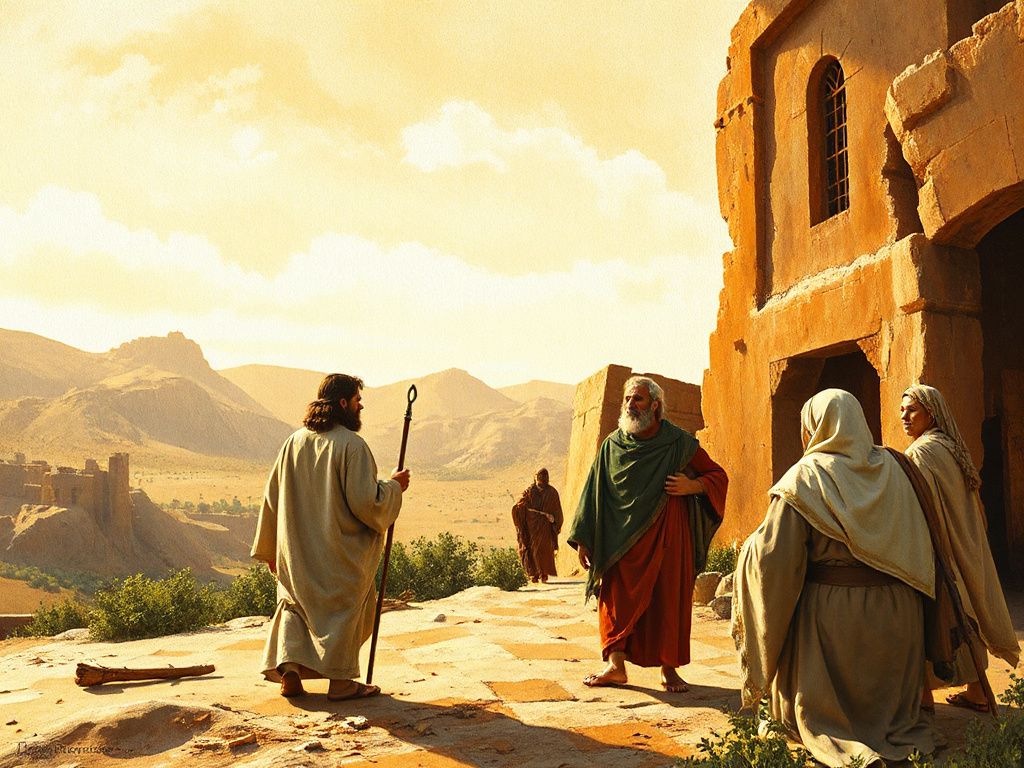
BIBLE BOOK GUIDE
Jeremiah
52 chapters
Jeremiah is the word of the Lord spoken through the prophet before and after Judah's fall, proclaiming judgment for unfaithfulness and mercy through a coming new covenant and ultimate restoration.
Jeremiah
Choose a chapter
Pick a chapter and it opens in the Current chapter tab. Come back here whenever you want to choose another one.
Why this book was written
Written during the final decades of Judah (c. 627–586 BC) and addressed to Judeans before and after the exile, Jeremiah warns that persistent covenant unfaithfulness and idolatry will bring Babylonian judgment. Through laments and personal confession he expresses God's broken heart, while pointing forward to forgiveness, restoration, the New Covenant, the Messianic reign, and the nations' future—all to call hopeless hearers to trust in the Lord's faithfulness.
Structure
- 1–20The Lord Calls Through Jeremiah and Pronounces Judgment
- 21–29Kings, False Prophets, and the People's Rebellion
- 30–33Restoration, the New Covenant, and the Coming Messiah
- 34–45Faithfulness and Struggle in the Final Years
- 46–51Oracles Against the Nations
- 52Appendix: The Fall of Jerusalem and Lasting Hope
Major themes
Judgment and Justice
Jeremiah proclaims that Judah will face Babylonian judgment for covenant unfaithfulness, idolatry, and injustice (Jer 4:5-31; 21:1-14). God's righteousness demands that sin be punished.
New Covenant and Renewal
Amid judgment, God promises a new covenant, writing His law on hearts and forgiving iniquity (Jer 31:31-34). This new covenant points to a more complete redemption and inner renewal.
Prophetic Mission and Suffering
Jeremiah is called to be a prophet to the nations (Jer 1:5) yet endures rejection, persecution, and inner anguish (Jer 11:18-23; 20:7-18), revealing the cost of faithfulness to God's word.
Repentance and Return
God repeatedly calls His people to repent and return, saying 'Return, thou backsliding Israel' (Jer 3:12-14; 25:5-6), revealing His merciful desire that they turn back to Him.
God's Faithfulness and Sovereignty
Despite Israel's unfaithfulness, God remains faithful to His covenants with Abraham and David (Jer 33:14-26) and sovereign over history, even using Babylon as an instrument of judgment (Jer 25:9-11).
Hope and Restoration
In the shadow of exile, God promises to redeem a remnant from the north, restore them to their land, and raise up a righteous Branch (Jer 23:5-6; 30:10-11; 32:36-44).
How it points to Christ
Jeremiah points to Christ in several ways: (1) The 'Righteous Branch' of Jer 23:5-6, a Davidic King who reigns in righteousness, applied in the New Testament to Jesus (Luke 1:68-79); (2) The 'New Covenant' of Jer 31:31-34 is applied in Hebrews 8-10 to Christ, who establishes it by His own blood and secures full forgiveness of sins; (3) Jeremiah as the 'weeping prophet' prefigures Christ's grief and rejection (Luke 19:41-44); (4) Jeremiah's being cast into the cistern and delivered (Jer 38) foreshadows Christ's death and resurrection. The whole book anticipates the Messiah who fulfills redemption and brings the new covenant to fruition.
Key verses
- 1:5The Lord appointed Jeremiah as a prophet to the nations before birth, grounding the book's prophetic mission.
- 9:23–24True boasting is not in wisdom, power, or wealth, but in knowing the Lord and practicing justice and righteousness.
- 23:5–6The messianic promise of 'the Lord Our Righteous Savior' anchors the book's hope.
- 29:11–13God's plans for peace and a future call the exiles to seek Him in prayer while they wait.
- 31:31–34The New Covenant promise—law written on hearts, forgiveness of sin, intimate knowledge of God—is a key OT text for NT theology.
- 33:2The Lord pledges by His own name to fulfill His word of salvation and restoration.
- 45:5God promises to preserve the faithful scribe Baruch, encouraging all who follow Him through crisis.
- 52:31–34The book closes with Jehoiachin's elevation, echoing the promise of restored Davidic rule and leaving a spark of hope.
Films & series on Jeremiah
Each has a guide: scripture sources, where it departs from the Bible, discussion questions, and where to watch
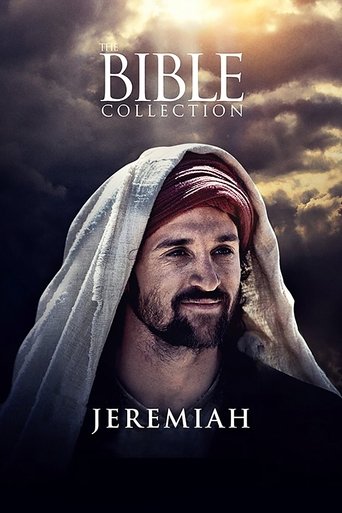
Reflections on Jeremiah
People in this book
Questions for reflection
- ·Jeremiah in Jer 20:7-9 laments being mocked yet unable to stop speaking God's word. How does this challenge me to choose between faithfulness to truth and being well-liked in my own walk of faith?
- ·God promises in Jer 31:31-34 to write His law on hearts, not on tablets of stone. What does this teach me about the gospel as inward renewal rather than mere external compliance?
- ·Israel repeatedly ignored God's call to repent through the prophets (Jer 25:3-7). Do I likewise harden my heart when God prompts me through Scripture, the Spirit, or fellow believers?
- ·God declares, 'I know the thoughts that I think toward you, thoughts of peace, and not of evil' (Jer 29:11). In difficulty or disappointment, how can I more faithfully hold on to this promise of the God of peace?
- ·Jeremiah weeps and intercedes for his people (Jer 9:1; 14:7-9). How does this stir me to intercede with tears for those who do not yet know God—my family, neighbors, and others?
Where Jeremiah fits in the Bible's storyline
This book appears in the 12-stop storyline at:
Where to start reading the Bible? See the full 12-stop storyline
Want to read Jeremiah start to finish? Open the reader for parallel Chinese/English text and ask anything as you go.
Start reading JeremiahJeremiah
Chapter 24
1Jehovah showed me, and, behold, two baskets of figs set before the temple of Jehovah, after that Nebuchadrezzar king of Babylon had carried away captive Jeconiah the son of Jehoiakim, king of Judah, and the princes of Judah, with the craftsmen and smiths, from Jerusalem, and had brought them to Babylon.
2One basket had very good figs, like the figs that are first-ripe; and the other basket had very bad figs, which could not be eaten, they were so bad.
3Then said Jehovah unto me, What seest thou, Jeremiah? And I said, Figs; the good figs, very good; and the bad, very bad, that cannot be eaten, they are so bad.
4And the word of Jehovah came unto me, saying,
5Thus saith Jehovah, the God of Israel: Like these good figs, so will I regard the captives of Judah, whom I have sent out of this place into the land of the Chaldeans, for good.
6For I will set mine eyes upon them for good, and I will bring them again to this land: and I will build them, and not pull them down; and I will plant them, and not pluck them up.
7And I will give them a heart to know me, that I am Jehovah: and they shall be my people, and I will be their God; for they shall return unto me with their whole heart.
8And as the bad figs, which cannot be eaten, they are so bad, surely thus saith Jehovah, So will I give up Zedekiah the king of Judah, and his princes, and the residue of Jerusalem, that remain in this land, and them that dwell in the land of Egypt,
9I will even give them up to be tossed to and fro among all the kingdoms of the earth for evil; to be a reproach and a proverb, a taunt and a curse, in all places whither I shall drive them.
10And I will send the sword, the famine, and the pestilence, among them, till they be consumed from off the land that I gave unto them and to their fathers.