ERA
United Kingdom
1050 BC
Davidic covenant: 2 Samuel 7:16; wisdom and worship: Psalms 23:1, Proverbs 3:5-6
Key Passages
Filter by Place
1kings
1kings
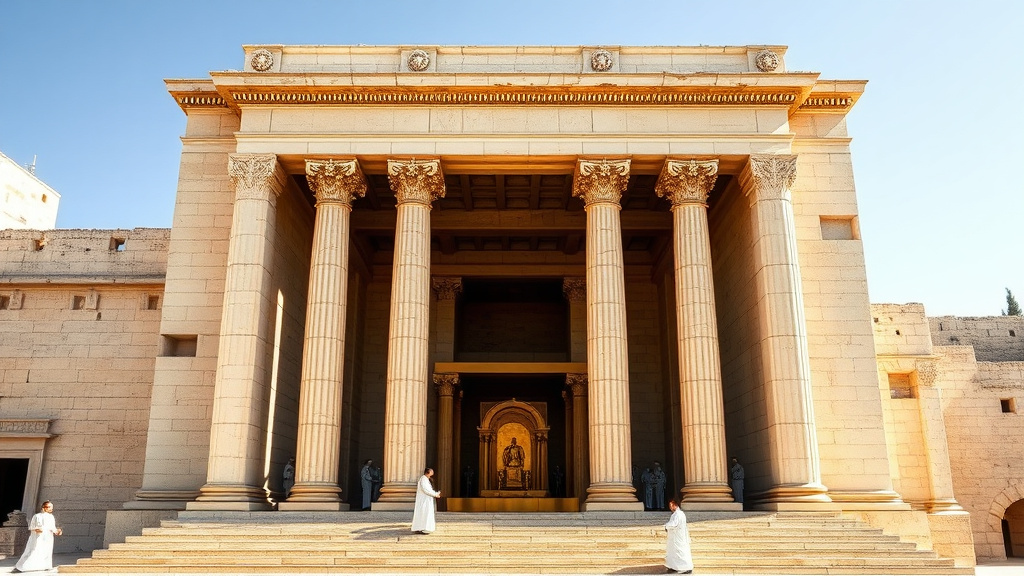
Solomon's Temple
Psalms 60:10
protestant「Hast not thou, O God, cast us off? And thou goest not forth, O God, with our hosts.」
Steadfast Love
allGod's faithful, covenantal love shown to David and Solomon, demonstrating His commitment to His promises.
How does Elijah's fire challenge Baal worship, and what does it teach us about confronting modern idols?
Learning from Mount Carmel how believers today can stand against idolatry.
1samuel 17
1samuel · Ch.17
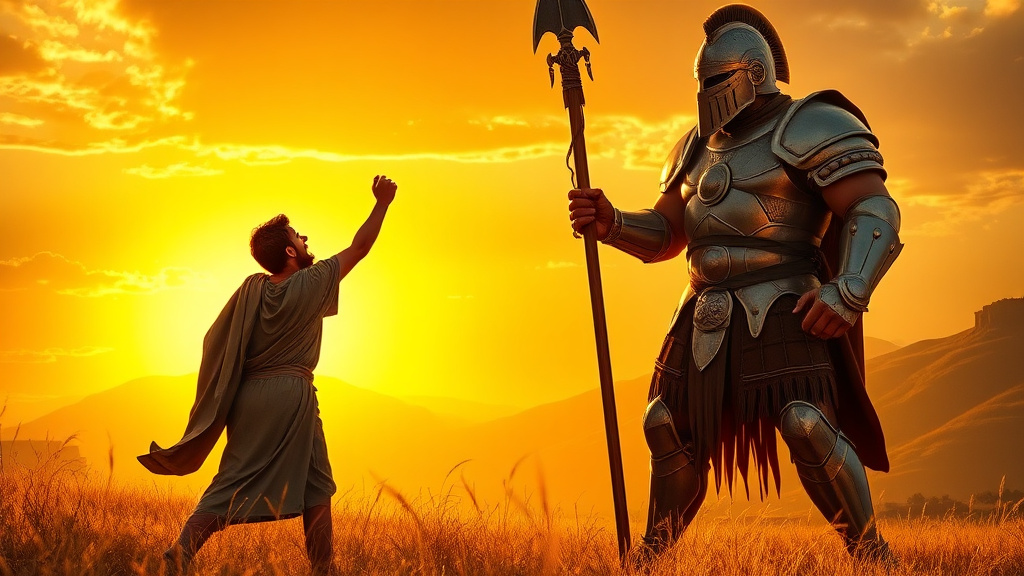
David vs Goliath: A Battle of Faith
2 Samuel 5:13
judaism「After he left Hebron, David took more concubines and wives in Jerusalem, and more sons and daughters were born to David.」
Anointed
allGod's appointment of Jehu as king to execute judgment, with anointing symbolizing divine commissioning and transfer of authority.
Why did David refuse Saul's armor, and what spiritual significance does this carry?
Carnal armor cannot win spiritual battles—God's deliverance does not rely on human strength or methods.
1 Samuel 3:17
protestant「And he said, What is the thing that Jehovah hath spoken unto thee? I pray thee, hide it not from me: God do so to thee, and more also, if thou hide anything from me of all the things that he spake unto thee.」
Levites
judaismThe tribe set apart for temple service, typifying the priestly role of New Covenant believers.
After Goliath fell, how did the Israelite women greet David, and why did Saul grow jealous?
The women sang 'Saul has slain his thousands, and David his ten thousands,' planting tension between king and hero.
Psalms 122:8
protestant「For my brethren and companions' sakes, I will now say, Peace be within thee.」
Holy of Holies
allThe innermost and most sacred part of the Temple, entered only by the high priest once a year, signifying God's transcendent presence and holiness.
1 Samuel 17:26 asks, 'Who is this uncircumcised Philistine that he should defy the armies of the living God?' How does David frame the conflict in theological terms rather than military ones, and what does this reveal about his understanding of Israel's identity?
David doesn't ask who can win the fight — he asks who can honor God's name. A discussion on faith versus strategy.
1 Kings 14:3
protestant「And take with thee ten loaves, and cakes, and a cruse of honey, and go to him: he will tell thee what shall become of the child.」
Transgression
allAn act of breaking God's commandments, leading to divine judgment and exile, underscoring covenantal responsibility.
How does Elijah's prayer contrast with the prophets of Baal in 1 Kings 18?
The frenzy of Baal's prophets versus Elijah's quiet prayer reveals the difference between idols and the living God.
1 Kings 10:10
protestant「And she gave the king a hundred and twenty talents of gold, and of spices very great store, and precious stones: there came no more such abundance of spices as these which the queen of Sheba gave to king Solomon.」
Lampstand
allGold lampstands in the Temple providing light, symbolizing God as the source of light and truth.
Why did Solomon's wisdom falter in his later years?
From the peak of wisdom to spiritual decline — lessons from Solomon's later years.
Proverbs 19:10
protestant「Delicate living is not seemly for a fool; Much less for a servant to have rule over princes.」
Ark of the Covenant
allThe Ark of the Covenant symbolizes God's covenant with Israel, housed in the Most Holy Place as the throne of His presence.
How does the same 'fire of the LORD' motif reappear in 1 Kings 19 with Elijah's experience at Horeb, and what changed between the fire at Carmel and the 'still small voice' that follows?
From consuming fire to a whisper: tracing the Spirit of the LORD through fire and silence.
Psalms 129:3
protestant「The plowers plowed upon my back; They made long their furrows.」
Passover
allThe festival commemorating Israel's salvation from Egypt, restored by Hezekiah, symbolizing redemption and renewal.
Elijah poured water on the offering three times, until the trench was filled. Why this methodical soaking before the fire, and what does it teach about the relationship between human effort and divine action?
Three soakings, then fire — what is the lesson in the delay?
Psalms 30:11
protestant「Thou hast turned for me my mourning into dancing; Thou hast loosed my sackcloth, and girded me with gladness;」
Eyes of the LORD
allSymbolizes God's omniscience and active oversight; He searches the whole earth to strengthen those wholly devoted to Him, demonstrating His sovereignty and care.
In 1 Kings 11, despite Solomon's famed wisdom, his heart turns away after foreign wives. How does the Deuteronomistic writer use this contrast to redefine what genuine wisdom requires beyond mere intellect?
Wisdom's tragic shadow — when brilliance fails the test of faithfulness.
Psalms 113:3
protestant「From the rising of the sun unto the going down of the same Jehovah's name is to be praised.」
Forsake
allTo abandon or betray God, breaking the relationship and His commandments.
Elijah poured water on the offering three times, until the trench was filled. Why this methodical soaking before the fire, and what does it teach about the relationship between human effort and divine action?
Three soakings, then fire — what is the lesson in the delay?
Ecclesiastes 9:4
protestant「For to him that is joined with all the living there is hope; for a living dog is better than a dead lion.」
Birthright
allThe special rights and blessings inherited by the firstborn son, symbolizing the transmission of God's grace and promises in Scripture.
1 Kings 11:1-13 records the tragic turn in Solomon's life—his many foreign wives lead his heart astray. How does this passage serve as a sobering counterpoint to his earlier gift of wisdom, and what does it teach about the vulnerability of even the wisest among us?
The fall of the wisest king—a sobering lesson on the heart's condition.
Psalms 77:10
protestant「And I said, This is my infirmity; But I will remember the years of the right hand of the Most High.」
Abominations
allDetestable acts, such as idolatry and moral corruption, that provoked divine judgment during the final years of Judah.
Why did David emphasize the name of the Lord over his own strength when facing Goliath?
Exploring David's reliance on God's power rather than weapons, from 1 Samuel 17:45-47.
Psalms 3:8
protestant「Salvation belongeth unto Jehovah: Thy blessing be upon thy people. [Selah]」
Faithfulness
allSteadfast trust and obedience to God, leading to spiritual strength and prosperity.
How does the judgment of the two mothers reveal Solomon's wisdom?
The sword-test: how Solomon discerned hearts and rendered true justice.
Song of Solomon 8:11
protestant「Solomon had a vineyard at Baal-hamon; He let out the vineyard unto keepers; Every one for the fruit thereof was to bring a thousand pieces of silver.」
Dagon
allThe chief god of the Philistines, considered a grain deity; Saul's head was fastened in the temple of Dagon, symbolizing the enemy's triumph and the humiliation of Israel's king.
Why did David choose a sling and stones to face Goliath instead of conventional weapons?
A shepherd boy faces a giant warrior with humble gear—what logic of faith underlies his choice?
Psalms 141:3
protestant「Set a watch, O Jehovah, before my mouth; Keep the door of my lips.」
Child Sacrifice
allThe abhorrent practice of burning children as offerings to false gods, detested by God and bringing judgment.
When Solomon asked for wisdom rather than wealth, what does this reveal about spiritual priorities?
In the dream at Gibeon, young Solomon made a surprising choice—he asked for wisdom, not power or riches.
Psalms 63:1
protestant「A Psalm of David, when he was in the wilderness of Judah. O God, thou art my God; earnestly will I seek thee: My soul thirsteth for thee, my flesh longeth for thee, In a dry and weary land, where no water is.」
Cherubim
allAngelic beings guarding God's glory, overshadowing the Ark in the Most Holy Place, symbolizing divine holiness and power.
In 1 Samuel 17:50, the text says David 'prevailed over the Philistine' with a sling and a stone, 'but there was no sword in David's hand.' How does this detail of unarmed victory shape Christian reflections on relying on God's power rather than human instruments?
Reflect on how the absence of a sword in David's hand speaks to faith over force.
Psalms 116:2
protestant「Because he hath inclined his ear unto me, Therefore will I call upon him as long as I live.」
Athaliah
allDaughter of Ahab and Jezebel who usurped Judah's throne and destroyed the royal family. She embodies evil's rise and highlights God's grace in preserving David's line.
1 Kings 10:1-10 records the Queen of Sheba testing Solomon with hard questions. What does this international encounter suggest about the reputation and scope of wisdom in the ancient world?
Wisdom drew seekers from afar — what does the Queen of Sheba's visit reveal about the universal hunger for truth?
2 Samuel 13:2
judaism「Amnon was so distraught because of his [half-]sister Tamar that he became sick; for she was a virgin, and it seemed impossible to Amnon to do anything to her.」
Wholehearted
allA fully committed heart toward God; the LORD supports the wholehearted; Asa's lack led to war, while Jehoshaphat's wholeheartedness brought peace and prosperity.
What does David's declaration in 1 Samuel 17:37 — 'The LORD who delivered me from the paw of the lion and from the paw of the bear will deliver me from the hand of this Philistine' — reveal about how he understood his past deliverances?
Explore how David interpreted earlier victories as theological milestones rather than mere coincidences.
1 Chronicles 7:2
protestant「And the sons of Tola: Uzzi, and Rephaiah, and Jeriel, and Jahmai, and Ibsam, and Shemuel, heads of their fathers' houses, to wit, of Tola; mighty men of valor in their generations: their number in the days of David was two and twenty thousand and six hundred.」
Humility
allAcknowledging one's sin and submitting to God, resulting in forgiveness and partial deliverance.
In 1 Samuel 17:50, the text says David 'prevailed over the Philistine' with a sling and a stone, 'but there was no sword in David's hand.' How does this detail of unarmed victory shape Christian reflections on relying on God's power rather than human instruments?
Reflect on how the absence of a sword in David's hand speaks to faith over force.
1 Chronicles 21:18
protestant「Then the angel of Jehovah commanded Gad to say to David, that David should go up, and rear an altar unto Jehovah in the threshing-floor of Ornan the Jebusite.」
Molten Sea
judaismA massive cast bronze basin supported by twelve oxen, used by priests for ritual washing, prefiguring the comprehensive purification rites of Temple worship.
The famous judgment of 1 Kings 3:16-28, where two mothers dispute over a living child, showcases Solomon's practical wisdom. What makes this particular case such a powerful demonstration of discerning hearts, and how does it still speak today?
Diving into the classic courtroom story that revealed Solomon's heart-knowledge.
1 Samuel 27:4
judaism「And when Saul was told that David had fled to Gath, he did not pursue him anymore.」
LORD of hosts
allA divine title meaning the Lord of armies, indicating His sovereignty over all heavenly and earthly powers, emphasizing His supreme authority and might.
What does Elijah's prayer for fire on Mount Carmel reveal about how we approach God in moments of crisis today?
Exploring the courage of Elijah's prayer and God's dramatic response in 1 Kings 18.
Proverbs 11:16
protestant「A gracious woman obtaineth honor; And violent men obtain riches.」
Justice and Righteousness
allThe core requirement for a king ruling Israel, reflecting God's justice and righteousness in leadership.
Solomon's wisdom drew kings and queens from many nations (1 Kings 10:1-13), yet later in the same book his heart turns away — what does this tension teach about the relationship between wisdom gifts and spiritual faithfulness?
From the Queen of Sheba's visit to Solomon's later idolatry — a sobering arc.
1 Chronicles 29:19
protestant「and give unto Solomon my son a perfect heart, to keep thy commandments, thy testimonies, and thy statutes, and to do all these things, and to build the palace, for which I have made provision.」
Friend of Abraham
allAbraham is called God's friend, symbolizing the intimate covenantal relationship between God and His chosen people.
1 Kings 11:1-13 describes Solomon's later turning away from wisdom through foreign alliances and idolatry. How does the same book use his decline to teach about the limits and vulnerabilities of human wisdom?
Wisdom's shadow side: a portrait of how the wisest king fell.
Psalms 104:2
protestant「Who coverest thyself with light as with a garment; Who stretchest out the heavens like a curtain;」
Throne
allThe eternal throne promised in the Davidic covenant, pointing to the Messiah's everlasting reign.
Elijah's prayer in 1 Kings 18:36-37 asks God to answer 'so that this people may know that you, YHWH, are God.' How does the petition 'let their hearts turn back' deepen the purpose of the miraculous fire beyond mere spectacle?
Reflecting on whether Elijah seeks confirmation—or conversion.