GUÍA DE PELÍCULA BÍBLICA
La historia de Ruth
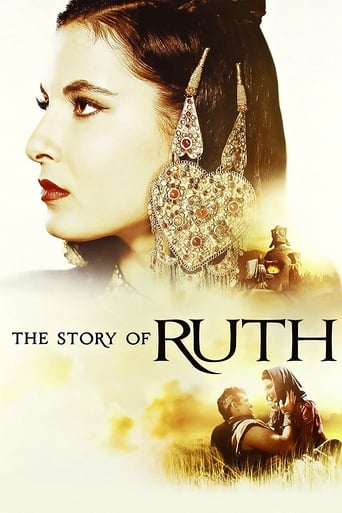
The Story of Ruth · Película · 1960 · 132 min
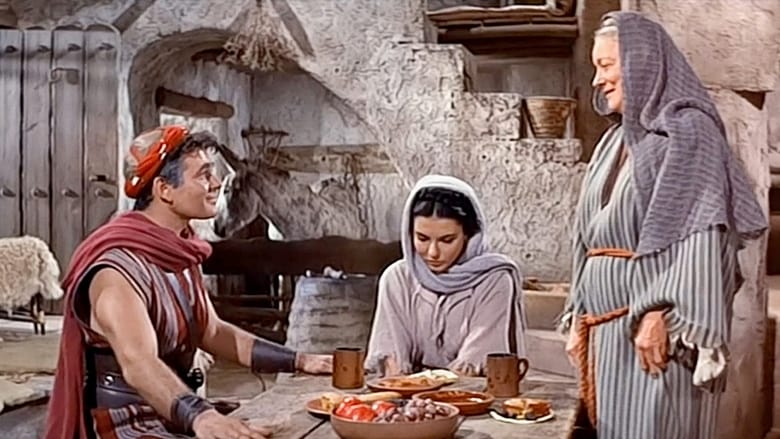
The 1960 film The Story of Ruth dramatizes the biblical account of Ruth, the Moabite widow who clings to Naomi and her God, leading ultimately to the lineage of King David.
De qué trata
The Story of Ruth (1960) centers on Ruth, one of two Moabite women married to the sons of Elimelech and Naomi. After Elimelech and his sons Mahlon and Chillion die, Naomi is left a widow with two widowed daughters-in-law and decides to return to Israel. One daughter-in-law, Orpah, says farewell; Ruth refuses to leave Naomi, declaring her loyalty to Naomi's people and her God. The overview also frames Ruth's early life in a way the Bible does not: she was sold into the Moabite royal household as a child because of her family's poverty, was raised as a priestess serving the Moabite idol Chemosh, fell in love with the Judean young man Mahlon, and ultimately left for Bethlehem with Mahlon's mother after Mahlon's death.
This story sits in the book of Ruth (chapters 1–4), a short narrative in the Hebrew Bible/Old Testament. The book's central figures are Ruth, Naomi, and Boaz. Ruth's faithful choice leads her into the people of Israel, and the closing chapters trace her marriage to Boaz and the birth of Obed, who becomes the father of Jesse, the father of David — placing Ruth directly in the lineage of Israel's greatest king.
Dónde está en la Biblia
- Rut 1:16-17Ruth's pledge to Naomi — 'thy people shall be my people, and thy God my God' — is the hinge of the whole book. It is where a Moabite woman crosses from her own people into the people of Israel and into faith in Israel's God. The film treats this declaration as the emotional center of the opening movement.
- Rut 2:12Boaz blesses Ruth for taking refuge 'under [Jehovah's] wings.' Coming from a former priestess of Chemosh in the film's telling, the image of sheltering wings stands in deliberate contrast to the idolatry Ruth is leaving behind.
- Rut 2:20Naomi identifies Boaz as 'one of our near kinsmen' — a relative with a duty to look after the family. This sets up the kinsman-redemption thread that runs through Ruth 3–4, where the question of who will act as redeemer is finally resolved.
- Rut 3:9Ruth asks Boaz to 'spread [his] skirt' over her because he is a near kinsman. The gesture is a request for kinsman-redemption — for Boaz to take up the duty to care for her and the family. Adapters often stage this scene with heightened intimacy, so it is worth asking how much of the film's staging is in the text and how much is added.
- Rut 4:14-15The women of Bethlehem bless Jehovah for giving Naomi a kinsman, calling Ruth 'better to thee than seven sons.' This public praise shows how Ruth's quiet faithfulness is read by the community as God's reversal of Naomi's loss.
- Rut 4:17The neighbors name the son Obed; he becomes the father of Jesse, the father of David. The book of Ruth closes inside the genealogy of Israel's greatest king, and Ruth the Moabite is named among his ancestors — a detail the film is likely to underline.
En qué se aparta de la Biblia
The provided overview clearly departs from the Bible in its backstory for Ruth: the film portrays her sold as a child into the Moabite royal household because of poverty, raised as a priestess of Chemosh, assigned to lead a sacrificial rite offering a young girl each year, falling in love with Mahlon, and facing the execution of Mahlon's father and brother before Mahlon himself dies. The book of Ruth introduces Ruth simply as a Moabite married to Mahlon; it says nothing of a priestess upbringing, a child sacrifice ritual, or a royal household sale. Watch for how the film uses this dramatic origin to set up the contrast between Moabite idolatry and faith in the God of Israel.
On scenes the Bible does describe, viewers can compare specific details with the text. Ruth 1:16–17 gives Ruth's declaration of loyalty to Naomi; Ruth 2:12 records Boaz's blessing invoking the God of Israel 'under whose wings' Ruth has come to take refuge; Ruth 2:20 identifies Boaz as a near kinsman; Ruth 3:9 records Ruth's request to Boaz to spread his skirt over her as a near kinsman; Ruth 4:14–17 traces the birth of Obed and his place in the line of David. Adapters commonly compress timelines, dramatize inner motivations, and invent backstory, so viewers may want to notice which moments the film treats as central and which it passes over quickly — such as the fuller legal exchange at the city gate in Ruth 4.
Preguntas para conversar
- 1
How does the film's portrayal of Ruth's background compare with Ruth 1:16–17?
Ruth 1:16–17 simply records Ruth's spoken pledge to Naomi — to go where Naomi goes and to make Naomi's people and God her own. The Bible says nothing about her being sold into a royal household or raised as a priestess of Chemosh. The film supplies that backstory to dramatize the contrast between Moabite idolatry and faith in the God of Israel, but the actual text begins at the moment of her declaration.
- 2
Why does Boaz matter in the story, and what does Ruth 2:20 tell us about him?
Ruth 2:20 identifies Boaz as 'one of our near kinsmen' — a relative with a duty to act as redeemer for the family of Elimelech. His significance is not only personal kindness (already shown in Ruth 2:12) but legal and familial: he has the standing to marry Ruth and raise up an heir for the family line, which is exactly what Ruth 4 resolves.
- 3
Why does the book of Ruth end with the genealogy in Ruth 4:17?
Ruth 4:17 names the newborn Obed, then states that he became the father of Jesse, the father of David. By closing here, the book places Ruth — a Moabite — directly in the ancestry of Israel's king David. The whole short narrative is framed so that a foreign woman's faithfulness becomes part of the line through which God will raise up David's house.
Dónde verla
Disponibilidad para Canadá; cambia con el tiempo. Verifica en la plataforma antes de verla. TMDb ↗
Reflexiones sobre Rut
Después de verla, lee el pasaje: encontrarás detalles que ninguna película alcanza a mostrar.