
BIBLE BOOK GUIDE
Luke
24 chapters
Through an orderly account, Luke presents Jesus as the merciful Savior-Messiah for sinners and outcasts, who sends His followers to proclaim repentance and forgiveness to all nations.
Luke
Choose a chapter
Pick a chapter and it opens in the Current chapter tab. Come back here whenever you want to choose another one.
Why this book was written
Written in the 60s AD for Gentile readers and early Christian disciples, Luke's purpose was to provide an accurate and ordered account of Jesus' life for those who had not witnessed His ministry, to strengthen their faith, equip them as witnesses, and to show how God's salvation extends from Israel to all nations.
Structure
- 1–4Prologue and Beginnings: Preparing the Way of Salvation
- 5–9Jesus' Ministry: Authority, Mercy, and Discipleship
- 10–19Journey to Jerusalem: Shaping Disciples for the Cost
- 20–23Passion and Cross: The Accomplishment of Salvation
- 24Resurrection and Great Commission: Witnesses to the Ends of the Earth
Major themes
The Universality of Salvation
Luke repeatedly emphasizes that Jesus' gospel is for all peoples, from Zechariah's prophecy (Luke 2:30-32) to the pre-ascension commission (Luke 24:47). Salvation crosses boundaries of ethnicity, gender, and status.
Mercy and Concern for the Marginalized
Luke uniquely highlights Jesus' care for the poor, women, sinners, Samaritans, and tax collectors — the Good Samaritan (Luke 10:25-37), the Prodigal Son (Luke 15:11-32), and Zacchaeus (Luke 19:1-10).
The Holy Spirit and Prayer
Luke gives more attention to the Spirit's presence and power (Luke 1:35; 4:1; 11:13) and to Jesus' modeled prayer life (Luke 3:21; 5:16; 9:18; 22:39-46).
The Journey of Discipleship
Luke centers on the 'travel narrative' to Jerusalem (Luke 9:51–19:44), showing disciples learning faith, humility, and self-denial as they follow Jesus.
The Historical Jesus and Salvation History
Luke opens with careful historical methodology (Luke 1:1-4), anchoring Jesus in the history of Rome and Israel (Luke 2:1-2; 3:1-2), presenting salvation arriving in real time and space.
Joy and Praise
Luke is filled with canticles — the Magnificat, Benedictus, and Nunc Dimittis (Luke 1:46-55; 1:68-79; 2:29-32) — and culminates in resurrection joy (Luke 24:52-53).
How it points to Christ
Luke presents Jesus as the Spirit-filled Son of Man (Luke 1:35; 4:1,14,18) and the promised Davidic Messiah-Christ-Lord (Luke 2:11; 1:32-33). He proclaims the Jubilee (Luke 4:16-21), fulfills Isaiah, embodies the merciful Good Samaritan (Luke 10:33-35), dies for sinners, rises, and commissions repentance and forgiveness to all nations (Luke 24:46-47). In Luke, Christ is both the historical figure and the risen Lord who indwells believers by the Spirit (Luke 24:49).
Key verses
- 1:1–4Luke's prologue showing his careful investigation to give certainty to the teachings Theophilus had received.
- 2:10–11The angel announces the good news of great joy—a Savior, Christ the Lord, the gospel's core for all people.
- 4:18–19Jesus declares His mission to proclaim liberty and healing—the program of salvation Luke emphasizes.
- 7:36–50The sinful woman's repentance and forgiveness highlight Luke's theme of mercy and faith.
- 9:23–24The cross-shaped discipleship: denying oneself and taking up the cross to find true life.
- 15:7Joy in heaven over one sinner who repents—a key verse for Luke's repentance and joy motif.
- 19:10The Son of Man came to seek and save the lost—Jesus' mission in Luke in one sentence.
- 24:46–48The risen Christ declares Scripture fulfilled and sends disciples as witnesses, launching the great commission.
Films & series on Luke
Each has a guide: scripture sources, where it departs from the Bible, discussion questions, and where to watch
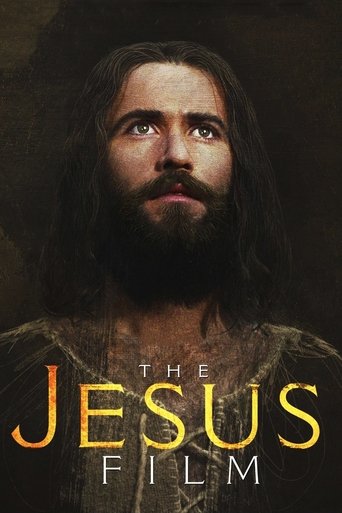
Jesus
Film · 1979
Three and a half years of Jesus' ministry, as told in the Gospel of Luke.
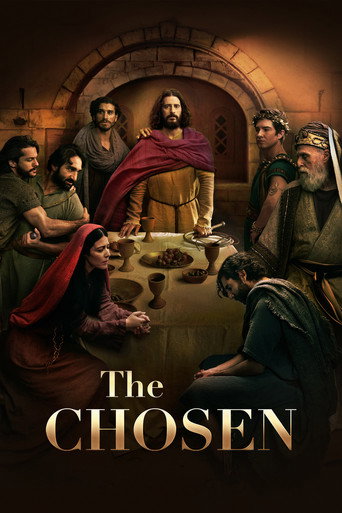
The Chosen
Series · 2019
The life of Christ through the eyes of those who encountered him.
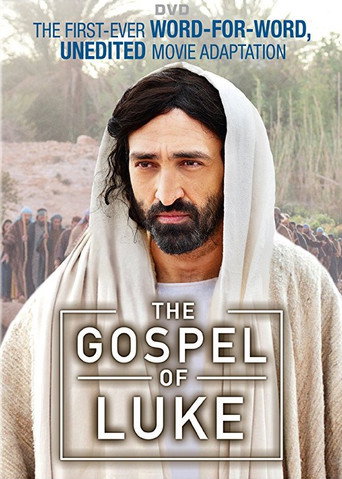
The Gospel of Luke
Film · 2015
THE GOSPEL OF LUKE, more than any other, fits the category of ancient biography. Luke, as "narrator" of events, sees Jesus as the "Savior" of all people, always on the side of the needy and the deprived. Narrated in the NIV by British actor Richard E. Grant and in the KJV by Sir Derek Jacobi, this epic production featuring specially constructed sets and the authentic countryside of Morocco has been critically acclaimed by leading religious scholars as a unique and highly authentic telling of the Jesus story.

Jesus of Nazareth
Series · 1977
Dramatizes the Birth, Life, Ministry, Crucifixion, and Resurrection of Jesus Christ, largely according to the Holy Bible's New Testament Gospels.
Reflections on Luke
People in this book
Questions for reflection
- ·In Luke, do you primarily know Jesus as Savior, Lord, or fellow traveler on the road? How are all three experienced in your life?
- ·How does the Parable of the Good Samaritan (Luke 10:25-37) challenge you to cross social, religious, or ethnic boundaries to love your neighbor?
- ·Mary's Magnificat (Luke 1:46-55) inverts worldly status — for what 'exaltation of the lowly' do you need to thank God today?
- ·Jesus prays urgently in Gethsemane (Luke 22:39-46). Is your prayer life marked by the same earnestness, watchfulness, and submission to the Father's will?
- ·On the Emmaus road, the risen Jesus expounds Scripture (Luke 24:25-27, 32). How do you see Christ in the Old Testament? How does the Spirit make your heart burn?
Want to read Luke start to finish? Open the reader for parallel Chinese/English text and ask anything as you go.
Start reading LukeLuke
Chapter 14
1And it came to pass, when he went into the house of one of the rulers of the Pharisees on a sabbath to eat bread, that they were watching him.
2And behold, there was before him a certain man that had the dropsy.
3And Jesus answering spake unto the lawyers and Pharisees, saying, Is it lawful to heal on the sabbath, or not?
4But they held their peace. And he took him, and healed him, and let him go.
5And he said unto them, Which of you shall have an ass or an ox fallen into a well, and will not straightway draw him up on a sabbath day?
6And they could not answer again unto these things.
7And he spake a parable unto those that were bidden, when he marked how they chose out the chief seats; saying unto them,
8When thou art bidden of any man to a marriage feast, sit not down in the chief seat; lest haply a more honorable man than thou be bidden of him,
9and he that bade thee and him shall come and say to thee, Give this man place; and then thou shalt begin with shame to take the lowest place.
10But when thou art bidden, go and sit down in the lowest place; that when he that hath bidden thee cometh, he may say to thee, Friend, go up higher: then shalt thou have glory in the presence of all that sit at meat with thee.
11For every one that exalteth himself shall be humbled; and he that humbleth himself shall be exalted.
12And he said to him also that had bidden him, When thou makest a dinner or a supper, call not thy friends, nor thy brethren, nor thy kinsmen, nor rich neighbors; lest haply they also bid thee again, and a recompense be made thee.
13But when thou makest a feast, bid the poor, the maimed, the lame, the blind:
14and thou shalt be blessed; because they have not wherewith to recompense thee: for thou shalt be recompensed in the resurrection of the just.
15And when one of them that sat at meat with him heard these things, he said unto him, Blessed is he that shall eat bread in the kingdom of God.
16But he said unto him, A certain man made a great supper; and he bade many:
17and he sent forth his servant at supper time to say to them that were bidden, Come; for all things are now ready.
18And they all with one consent began to make excuse. The first said unto him, I have bought a field, and I must needs go out and see it; I pray thee have me excused.
19And another said, I have bought five yoke of oxen, and I go to prove them; I pray thee have me excused.
20And another said, I have married a wife, and therefore I cannot come.
21And the servant came, and told his lord these things. Then the master of the house being angry said to his servant, Go out quickly into the streets and lanes of the city, and bring in hither the poor and maimed and blind and lame.
22And the servant said, Lord, what thou didst command is done, and yet there is room.
23And the lord said unto the servant, Go out into the highways and hedges, and constrain them to come in, that my house may be filled.
24For I say unto you, that none of those men that were bidden shall taste of my supper.
25Now there went with him great multitudes: and he turned, and said unto them,
26If any man cometh unto me, and hateth not his own father, and mother, and wife, and children, and brethren, and sisters, yea, and his own life also, he cannot be my disciple.
27 Whosoever doth not bear his own cross, and come after me, cannot be my disciple.
28For which of you, desiring to build a tower, doth not first sit down and count the cost, whether he have wherewith to complete it?
29Lest haply, when he hath laid a foundation, and is not able to finish, all that behold begin to mock him,
30saying, This man began to build, and was not able to finish.
31Or what king, as he goeth to encounter another king in war, will not sit down first and take counsel whether he is able with ten thousand to meet him that cometh against him with twenty thousand?
32Or else, while the other is yet a great way off, he sendeth an ambassage, and asketh conditions of peace.
33So therefore whosoever he be of you that renounceth not all that he hath, he cannot be my disciple.
34Salt therefore is good: but if even the salt have lost its savor, wherewith shall it be seasoned?
35It is fit neither for the land nor for the dunghill: men cast it out. He that hath ears to hear, let him hear.