BIBLE BOOK GUIDE
Luke
24 chapters
Through an orderly account, Luke presents Jesus as the merciful Savior-Messiah for sinners and outcasts, who sends His followers to proclaim repentance and forgiveness to all nations.
Luke
Choose a chapter
Pick a chapter and it opens in the Current chapter tab. Come back here whenever you want to choose another one.
Why this book was written
Written in the 60s AD for Gentile readers and early Christian disciples, Luke's purpose was to provide an accurate and ordered account of Jesus' life for those who had not witnessed His ministry, to strengthen their faith, equip them as witnesses, and to show how God's salvation extends from Israel to all nations.
Structure
- 1–4Prologue and Beginnings: Preparing the Way of Salvation
- 5–9Jesus' Ministry: Authority, Mercy, and Discipleship
- 10–19Journey to Jerusalem: Shaping Disciples for the Cost
- 20–23Passion and Cross: The Accomplishment of Salvation
- 24Resurrection and Great Commission: Witnesses to the Ends of the Earth
Major themes
The Universality of Salvation
Luke repeatedly emphasizes that Jesus' gospel is for all peoples, from Zechariah's prophecy (Luke 2:30-32) to the pre-ascension commission (Luke 24:47). Salvation crosses boundaries of ethnicity, gender, and status.
Mercy and Concern for the Marginalized
Luke uniquely highlights Jesus' care for the poor, women, sinners, Samaritans, and tax collectors — the Good Samaritan (Luke 10:25-37), the Prodigal Son (Luke 15:11-32), and Zacchaeus (Luke 19:1-10).
The Holy Spirit and Prayer
Luke gives more attention to the Spirit's presence and power (Luke 1:35; 4:1; 11:13) and to Jesus' modeled prayer life (Luke 3:21; 5:16; 9:18; 22:39-46).
The Journey of Discipleship
Luke centers on the 'travel narrative' to Jerusalem (Luke 9:51–19:44), showing disciples learning faith, humility, and self-denial as they follow Jesus.
The Historical Jesus and Salvation History
Luke opens with careful historical methodology (Luke 1:1-4), anchoring Jesus in the history of Rome and Israel (Luke 2:1-2; 3:1-2), presenting salvation arriving in real time and space.
Joy and Praise
Luke is filled with canticles — the Magnificat, Benedictus, and Nunc Dimittis (Luke 1:46-55; 1:68-79; 2:29-32) — and culminates in resurrection joy (Luke 24:52-53).
How it points to Christ
Luke presents Jesus as the Spirit-filled Son of Man (Luke 1:35; 4:1,14,18) and the promised Davidic Messiah-Christ-Lord (Luke 2:11; 1:32-33). He proclaims the Jubilee (Luke 4:16-21), fulfills Isaiah, embodies the merciful Good Samaritan (Luke 10:33-35), dies for sinners, rises, and commissions repentance and forgiveness to all nations (Luke 24:46-47). In Luke, Christ is both the historical figure and the risen Lord who indwells believers by the Spirit (Luke 24:49).
Key verses
- 1:1–4Luke's prologue showing his careful investigation to give certainty to the teachings Theophilus had received.
- 2:10–11The angel announces the good news of great joy—a Savior, Christ the Lord, the gospel's core for all people.
- 4:18–19Jesus declares His mission to proclaim liberty and healing—the program of salvation Luke emphasizes.
- 7:36–50The sinful woman's repentance and forgiveness highlight Luke's theme of mercy and faith.
- 9:23–24The cross-shaped discipleship: denying oneself and taking up the cross to find true life.
- 15:7Joy in heaven over one sinner who repents—a key verse for Luke's repentance and joy motif.
- 19:10The Son of Man came to seek and save the lost—Jesus' mission in Luke in one sentence.
- 24:46–48The risen Christ declares Scripture fulfilled and sends disciples as witnesses, launching the great commission.
Films & series on Luke
Each has a guide: scripture sources, where it departs from the Bible, discussion questions, and where to watch
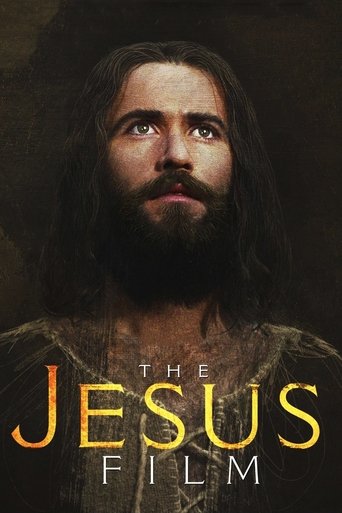
Jesus
Film · 1979
Three and a half years of Jesus' ministry, as told in the Gospel of Luke.
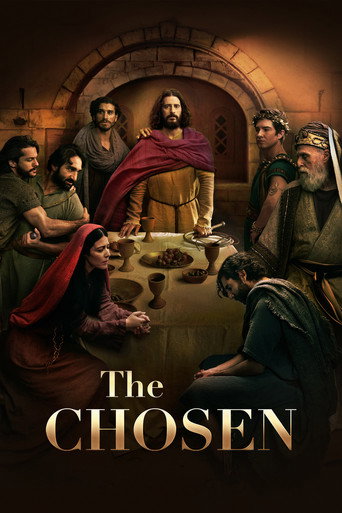
The Chosen
Series · 2019
The life of Christ through the eyes of those who encountered him.
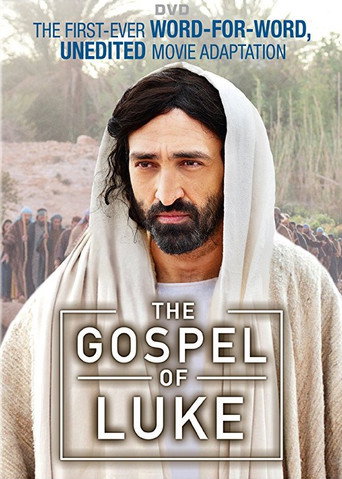
The Gospel of Luke
Film · 2015
THE GOSPEL OF LUKE, more than any other, fits the category of ancient biography. Luke, as "narrator" of events, sees Jesus as the "Savior" of all people, always on the side of the needy and the deprived. Narrated in the NIV by British actor Richard E. Grant and in the KJV by Sir Derek Jacobi, this epic production featuring specially constructed sets and the authentic countryside of Morocco has been critically acclaimed by leading religious scholars as a unique and highly authentic telling of the Jesus story.

Jesus of Nazareth
Series · 1977
Dramatizes the Birth, Life, Ministry, Crucifixion, and Resurrection of Jesus Christ, largely according to the Holy Bible's New Testament Gospels.
Reflections on Luke
People in this book
Questions for reflection
- ·In Luke, do you primarily know Jesus as Savior, Lord, or fellow traveler on the road? How are all three experienced in your life?
- ·How does the Parable of the Good Samaritan (Luke 10:25-37) challenge you to cross social, religious, or ethnic boundaries to love your neighbor?
- ·Mary's Magnificat (Luke 1:46-55) inverts worldly status — for what 'exaltation of the lowly' do you need to thank God today?
- ·Jesus prays urgently in Gethsemane (Luke 22:39-46). Is your prayer life marked by the same earnestness, watchfulness, and submission to the Father's will?
- ·On the Emmaus road, the risen Jesus expounds Scripture (Luke 24:25-27, 32). How do you see Christ in the Old Testament? How does the Spirit make your heart burn?
Want to read Luke start to finish? Open the reader for parallel Chinese/English text and ask anything as you go.
Start reading LukeLuke
Chapter 20
1And it came to pass, on one of the days, as he was teaching the people in the temple, and preaching the gospel, there came upon him the chief priests and the scribes with the elders;
2and they spake, saying unto him, Tell us: By what authority doest thou these things? or who is he that gave thee this authority?
3And he answered and said unto them, I also will ask you a question; and tell me:
4The baptism of John, was it from heaven, or from men?
5And they reasoned with themselves, saying, If we shall say, From heaven; he will say, Why did ye not believe him?
6But if we shall say, From men; all the people will stone us: for they are persuaded that John was a prophet.
7And they answered, that they knew not whence it was.
8And Jesus said unto them, Neither tell I you by what authority I do these things.
9And he began to speak unto the people this parable: A man planted a vineyard, and let it out to husbandmen, and went into another country for a long time.
10And at the season he sent unto the husbandmen a servant, that they should give him of the fruit of the vineyard: but the husbandmen beat him, and sent him away empty.
11And he sent yet another servant: and him also they beat, and handled him shamefully, and sent him away empty.
12And he sent yet a third: and him also they wounded, and cast him forth.
13And the lord of the vineyard said, What shall I do? I will send my beloved son; it may be they will reverence him.
14But when the husbandmen saw him, they reasoned one with another, saying, This is the heir; let us kill him, that the inheritance may be ours.
15And they cast him forth out of the vineyard, and killed him. What therefore will the lord of the vineyard do unto them?
16He will come and destroy these husbandmen, and will give the vineyard unto others. And when they heard it, they said, God forbid.
17But he looked upon them, and said, What then is this that is written, The stone which the builders rejected, The same was made the head of the corner?
18Every one that falleth on that stone shall be broken to pieces; but on whomsoever it shall fall, it will scatter him as dust.
19And the scribes and the chief priests sought to lay hands on him in that very hour; and they feared the people: for they perceived that he spake this parable against them.
20And they watched him, and sent forth spies, who feigned themselves to be righteous, that they might take hold of his speech, so as to deliver him up to the rule and to the authority of the governor.
21And they asked him, saying, Teacher, we know that thou sayest and teachest rightly, and acceptest not the person of any, but of a truth teachest the way of God:
22Is it lawful for us to give tribute unto Caesar, or not?
23But he perceived their craftiness, and said unto them,
24Show me a denarius. Whose image and superscription hath it? And they said, Caesar's.
25And he said unto them, Then render unto Caesar the things that are Caesar's, and unto God the things that are God's.
26And they were not able to take hold of the saying before the people: and they marvelled at his answer, and held their peace.
27And there came to him certain of the Sadducees, they that say that there is no resurrection;
28and they asked him, saying, Teacher, Moses wrote unto us, that if a man's brother die, having a wife, and he be childless, his brother should take the wife, and raise up seed unto his brother.
29There were therefore seven brethren: and the first took a wife, and died childless;
30and the second:
31and the third took her; and likewise the seven also left no children, and died.
32Afterward the woman also died.
33In the resurrection therefore whose wife of them shall she be? for the seven had her to wife.
34And Jesus said unto them, The sons of this world marry, and are given in marriage:
35but they that are accounted worthy to attain to that world, and the resurrection from the dead, neither marry, nor are given in marriage:
36for neither can they die any more: for they are equal unto the angels; and are sons of God, being sons of the resurrection.
37But that the dead are raised, even Moses showed, in the place concerning the Bush, when he calleth the Lord the God of Abraham, and the God of Isaac, and the God of Jacob.
38Now he is not the God of the dead, but of the living: for all live unto him.
39And certain of the scribes answering said, Teacher, thou hast well said.
40For they durst not any more ask him any question.
41And he said unto them, How say they that the Christ is David's son?
42For David himself saith in the book of Psalms, The Lord said unto my Lord, Sit thou on my right hand,
43Till I make thine enemies the footstool of thy feet.
44David therefore calleth him Lord, and how is he his son?
45And in the hearing of all the people he said unto his disciples,
46Beware of the scribes, who desire to walk in long robes, and love salutations in the marketplaces, and chief seats in the synagogues, and chief places at feasts;
47who devour widows' houses, and for a pretence make long prayers: these shall receive greater condemnation.