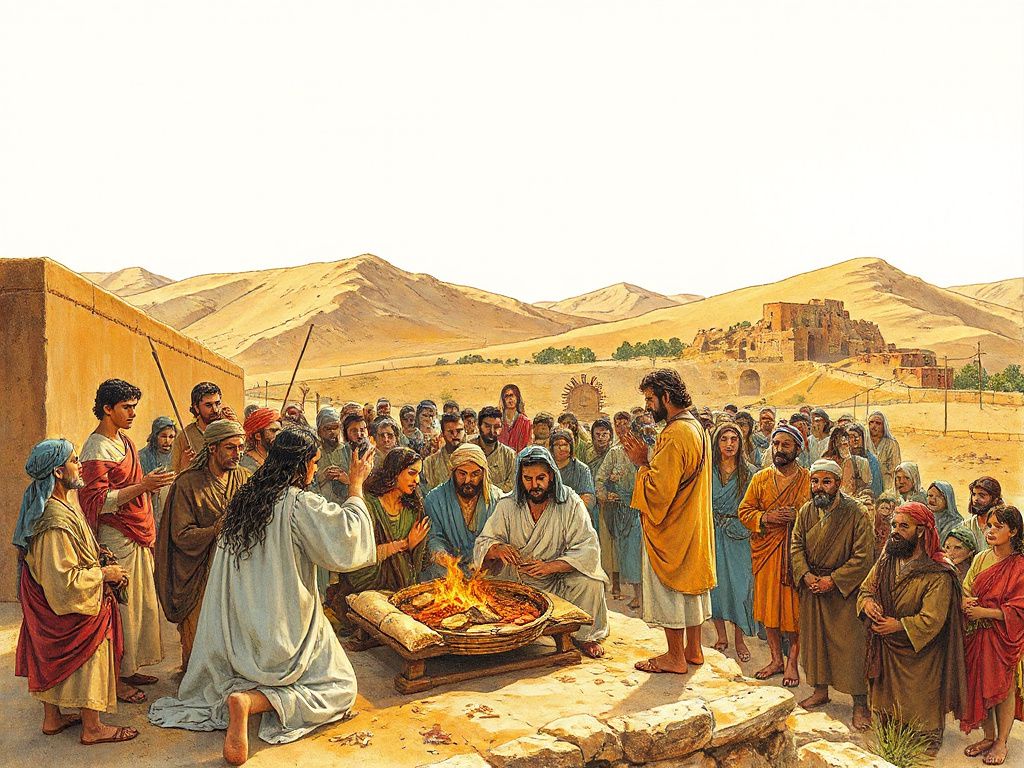
GUÍA DEL LIBRO BÍBLICO
Guía de Levítico
27 capítulos en total
Cómo Israel, mediante el sacrificio, la purificación y la vida santa, vive como un pueblo apartado ante un Dios santo.
Levítico
Elige un capítulo
Elige un capítulo y se abrirá en la pestaña Capítulo actual. Vuelve aquí para elegir otro.
Por qué se escribió este libro
Escrito por Moisés después de que Israel entró en pacto en el Sinaí, Levítico instruye a la congregación redimida de Israel sobre la santidad de Dios, el manejo del pecado y cómo deben vivir; su propósito es convertirlos en una nación santa y sacerdotal mediante sacrificios y estatutos.
Estructura por secciones
- 1–7Leyes de los sacrificios
- 8–10Consagración y servicio de los sacerdotes
- 11–16Leyes de lo limpio y lo inmundo
- 17–22Mandatos para la vida santa
- 23–27Fiestas, el santuario y los votos
Temas principales
Santidad y purificación
Levítico ofrece instrucciones detalladas sobre cómo Israel debía mantener la santidad en el cuerpo, los rituales y la moral—abarcando las leyes sobre lo limpio y lo inmundo, la purificación sacerdotal y la separación de la impureza—y subraya que la santidad de Dios exige una santidad correspondiente en su pueblo (Lv. 11–15).
Expiación e intercesión
El Día de la Expiación (Lv. 16) constituye el clímax del libro: el sumo sacerdote entraba una vez al año en el Lugar Santísimo para hacer expiación por sí mismo y por el pueblo, prefigurando la obra expiadora definitiva de Cristo. El papel del sacerdote como mediador recorre todo el libro.
Sacrificio y sustitución
Los cinco ofrecimientos—holocausto, ofrenda de cereal, ofrenda de comunión, ofrenda por el pecado y ofrenda por la culpa (Lv. 1–7)—proporcionaban expiación sustitutiva, enseñando que el pecado tiene un precio y revelando a la vez la gracia y el perdón de Dios.
Santidad en la comunidad del pacto
Levítico 17–27 enfatiza la vida ética y comunitaria dentro del pacto—moralidad sexual, justicia con el prójimo, años de reposo y Jubileo, fiestas y mayordomía fiel—y llama a Israel a vivir su identidad como pueblo del pacto (Lv. 17–27).
La soberanía y provisión de Dios
Las instrucciones detalladas de Dios sobre ofrendas, sacerdocio, fiestas y años sabáticos de la tierra revelan Su soberanía sobre cada aspecto de la vida, mientras que los años sabáticos, el Jubileo y las fiestas demuestran Su provisión fiel y Su misericordia.
Consagración y servicio
La consagración de los sacerdotes (Lv. 8–10) y la dedicación de los levitas para el servicio muestran que ministrar a Dios requiere limpieza, unción y plena dedicación a Su servicio.
Cómo apunta a Cristo
Levítico señala a Cristo como el sumo sacerdote definitivo y el sacrificio definitivo. Él es el mediador de un pacto superior (Heb. 8:6), cuya única ofrenda de su cuerpo lleva a cabo para siempre lo que el repetido Día de la Expiación solo podía prefigurar (Heb. 9:11–14; 10:1–14). Las ofrendas tipifican a Cristo: el holocausto (consagración perfecta), la ofrenda por el pecado (que lleva la pena del pecado) y la ofrenda de comunión (restauración de la comunión con Dios). El sábado y los años del Jubileo prefiguran el verdadero reposo y la libertad que Cristo trae. El mandato: «Sean santos, porque yo, el Señor su Dios, soy santo» (Lv. 19:2), se cumple en los creyentes mediante la santidad de Cristo imputada e impartida.
Versículos clave
- 1:3–4El holocausto prefigura a Cristo ofreciéndose sin defecto como sustituto.
- 16:30El Día de la Expiación: la provisión de Dios de expiación para toda la congregación, la suprema imagen veterotestamentaria de la redención.
- 17:11«Porque la vida de la carne está en la sangre»: el fundamento teológico de la expiación sustitutiva.
- 19:2«Sean santos, porque yo soy santo»: el llamado central del libro.
- 20:7–8La santidad es la obra propia de Dios, que santifica al pueblo desde adentro.
- 23:5La Pascua apunta a Cristo, nuestra Cordero pascual.
- 25:10El año del Jubileo prefigura la libertad y la restauración llevadas a cabo en Cristo.
- 27:30El diezmo pertenece al Señor, en sintonía con el principio del NT de entregarlo todo a Dios.
Reflexiones sobre Levítico
Preguntas para reflexionar
- ·¿Cómo profundizan las leyes de pureza en Levítico tu comprensión de la seriedad del pecado y de la demanda de Dios de santidad?
- ·¿Cómo te dirige el detalle del Día de la Expiación hacia Cristo como el sacrificio único y definitivo por tu pecado?
- ·Como creyente del Nuevo Pacto, ¿cómo comprendes la relación entre la gracia y el llamado a "ser santo"?
- ·¿Cómo refleja el mandato del Jubileo de liberar a los esclavos y restituir la herencia la libertad y restauración que Cristo trae en el evangelio?
- ·El sacerdote tenía primero que hacer expiación por sí mismo antes de expiar por el pueblo (Lv. 16): ¿cómo demuestra esto que nadie puede acercarse a Dios por sus propios méritos?
Dónde encaja Levítico en la historia de la Biblia
Este libro aparece en el recorrido de 12 paradas en:
¿Por dónde empezar a leer la Biblia? Mira las 12 paradas completas
¿Quieres leer Levítico de principio a fin? Abre el lector con texto paralelo en chino e inglés y pregunta lo que necesites en el camino.
Empezar a leer LevíticoLevítico
Capítulo 11
- 1.Habló Jehová a Moisés y a Aarón, diciéndoles:And Jehovah spake unto Moses and to Aaron, saying unto them,
- 2.Hablad a los hijos de Israel y decidles: Estos son los animales que comeréis de entre todos los animales que hay sobre la tierra.Speak unto the children of Israel, saying, These are the living things which ye may eat among all the beasts that are on the earth.
- 3.De entre los animales, todo el que tiene pezuña hendida y que rumia, éste comeréis.Whatsoever parteth the hoof, and is clovenfooted, and cheweth the cud, among the beasts, that may ye eat.
- 4.Pero de los que rumian o que tienen pezuña, no comeréis éstos: el camello, porque rumia pero no tiene pezuña hendida, lo tendréis por inmundo.Nevertheless these shall ye not eat of them that chew the cud, or of them that part the hoof: the camel, because he cheweth the cud but parteth not the hoof, he is unclean unto you.
- 5.También el conejo, porque rumia, pero no tiene pezuña, lo tendréis por inmundo.And the coney, because he cheweth the cud but parteth not the hoof, he is unclean unto you.
- 6.Asimismo la liebre, porque rumia, pero no tiene pezuña, la tendréis por inmunda.And the hare, because she cheweth the cud but parteth not the hoof, she is unclean unto you.
- 7.También el cerdo, porque tiene pezuñas, y es de pezuñas hendidas, pero no rumia, lo tendréis por inmundo.And the swine, because he parteth the hoof, and is clovenfooted, but cheweth not the cud, he is unclean unto you.
- 8.De la carne de ellos no comeréis, ni tocaréis su cuerpo muerto; los tendréis por inmundos.Of their flesh ye shall not eat, and their carcasses ye shall not touch; they are unclean unto you.
- 9.Esto comeréis de todos los animales que viven en las aguas: todos los que tienen aletas y escamas en las aguas del mar, y en los ríos, estos comeréis.These may ye eat of all that are in the waters: whatsoever hath fins and scales in the waters, in the seas, and in the rivers, that may ye eat.
- 10.Pero todos los que no tienen aletas ni escamas en el mar y en los ríos, así de todo lo que se mueve como de toda cosa viviente que está en las aguas, los tendréis en abominación.And all that have not fins and scales in the seas, and in the rivers, of all that move in the waters, and of all the living creatures that are in the waters, they are an abomination unto you,
- 11.Os serán, pues, abominación; de su carne no comeréis, y abominaréis sus cuerpos muertos.and they shall be an abomination unto you; ye shall not eat of their flesh, and their carcasses ye shall have in abomination.
- 12.Todo lo que no tuviere aletas y escamas en las aguas, lo tendréis en abominación.Whatsoever hath no fins nor scales in the waters, that is an abomination unto you.
- 13.Y de las aves, éstas tendréis en abominación; no se comerán, serán abominación: el águila, el quebrantahuesos, el azor,And these ye shall have in abomination among the birds; they shall not be eaten, they are an abomination: the eagle, and the gier-eagle, and the ospray,
- 14.el gallinazo, el milano según su especie;and the kite, and the falcon after its kind,
- 15.todo cuervo según su especie;every raven after its kind,
- 16.el avestruz, la lechuza, la gaviota, el gavilán según su especie;and the ostrich, and the night-hawk, and the sea-mew, and the hawk after its kind,
- 17.el buho, el somormujo, el ibis,and the little owl, and the cormorant, and the great owl,
- 18.el calamón, el pelícano, el buitre,and the horned owl, and the pelican, and the vulture,
- 19.la cigüeña, la garza según su especie, la abubilla y el murciélago.and the stork, the heron after its kind, and the hoopoe, and the bat.
- 20.Todo insecto alado que anduviere sobre cuatro patas, tendréis en abominación.All winged creeping things that go upon all fours are an abomination unto you.
- 21.Pero esto comeréis de todo insecto alado que anda sobre cuatro patas, que tuviere piernas además de sus patas para saltar con ellas sobre la tierra;Yet these may ye eat of all winged creeping things that go upon all fours, which have legs above their feet, wherewith to leap upon the earth.
- 22.estos comeréis de ellos: la langosta según su especie, el langostín según su especie, el argol según su especie, y el hagab según su especie.Even these of them ye may eat: the locust after its kind, and the bald locust after its kind, and the cricket after its kind, and the grasshopper after its kind.
- 23.Todo insecto alado que tenga cuatro patas, tendréis en abominación.But all winged creeping things, which have four feet, are an abomination unto you.
- 24.Y por estas cosas seréis inmundos; cualquiera que tocare sus cuerpos muertos será inmundo hasta la noche,And by these ye shall become unclean: whosoever toucheth the carcass of them shall be unclean until the even;
- 25.y cualquiera que llevare algo de sus cadáveres lavará sus vestidos, y será inmundo hasta la noche.And whosoever beareth aught of the carcass of them shall wash his clothes, and be unclean until the even.
- 26.Todo animal de pezuña, pero que no tiene pezuña hendida, ni rumia, tendréis por inmundo; y cualquiera que los tocare será inmundo.Every beast which parteth the hoof, and is not clovenfooted, nor cheweth the cud, is unclean unto you: every one that toucheth them shall be unclean.
- 27.Y de todos los animales que andan en cuatro patas, tendréis por inmundo a cualquiera que ande sobre sus garras; y todo el que tocare sus cadáveres será inmundo hasta la noche.And whatsoever goeth upon its paws, among all beasts that go on all fours, they are unclean unto you: whoso toucheth their carcass shall be unclean until the even.
- 28.Y el que llevare sus cadáveres, lavará sus vestidos, y será inmundo hasta la noche; los tendréis por inmundos.And he that beareth the carcass of them shall wash his clothes, and be unclean until the even: they are unclean unto you.
- 29.Y tendréis por inmundos a estos animales que se mueven sobre la tierra: la comadreja, el ratón, la rana según su especie,And these are they which are unclean unto you among the creeping things that creep upon the earth: the weasel, and the mouse, and the great lizard after its kind,
- 30.el erizo, el cocodrilo, el lagarto, la lagartija y el camaleón.and the gecko, and the land-crocodile, and the lizard, and the sand-lizard, and the chameleon.
- 31.Estos tendréis por inmundos de entre los animales que se mueven, y cualquiera que los tocare cuando estuvieren muertos será inmundo hasta la noche.These are they which are unclean to you among all that creep: whosoever doth touch them, when they are dead, shall be unclean until the even.
- 32.Y todo aquello sobre que cayere algo de ellos después de muertos, será inmundo; sea cosa de madera, vestido, piel, saco, sea cualquier instrumento con que se trabaja, será metido en agua, y quedará inmundo hasta la noche; entonces quedará limpio.And upon whatsoever any of them, when they are dead, doth fall, it shall be unclean; whether it be any vessel of wood, or raiment, or skin, or sack, whatsoever vessel it be, wherewith any work is done, it must be put into water, and it shall be unclean until the even; then shall it be clean.
- 33.Toda vasija de barro dentro de la cual cayere alguno de ellos será inmunda, así como todo lo que estuviere en ella, y quebraréis la vasija.And every earthen vessel, whereinto any of them falleth, whatsoever is in it shall be unclean, and it ye shall break.
- 34.Todo alimento que se come, sobre el cual cayere el agua de tales vasijas, será inmundo; y toda bebida que hubiere en esas vasijas será inmunda.All food therein which may be eaten, that on which water cometh, shall be unclean; and all drink that may be drunk in every such vessel shall be unclean.
- 35.Todo aquello sobre que cayere algo del cadáver de ellos será inmundo; el horno u hornillos se derribarán; son inmundos, y por inmundos los tendréis.And every thing whereupon any part of their carcass falleth shall be unclean; whether oven, or range for pots, it shall be broken in pieces: they are unclean, and shall be unclean unto you.
- 36.Con todo, la fuente y la cisterna donde se recogen aguas serán limpias; mas lo que hubiere tocado en los cadáveres será inmundo.Nevertheless a fountain or a pit wherein is a gathering of water shall be clean: but that which toucheth their carcass shall be unclean.
- 37.Y si cayere algo de los cadáveres sobre alguna semilla que se haya de sembrar, será limpia.And if aught of their carcass fall upon any sowing seed which is to be sown, it is clean.
- 38.Mas si se hubiere puesto agua en la semilla, y cayere algo de los cadáveres sobre ella, la tendréis por inmunda.But if water be put upon the seed, and aught of their carcass fall thereon, it is unclean unto you.
- 39.Y si algún animal que tuviereis para comer muriere, el que tocare su cadáver será inmundo hasta la noche.And if any beast, of which ye may eat, die; he that toucheth the carcass thereof shall be unclean until the even.
- 40.Y el que comiere del cuerpo muerto, lavará sus vestidos y será inmundo hasta la noche; asimismo el que sacare el cuerpo muerto, lavará sus vestidos y será inmundo hasta la noche.And he that eateth of the carcass of it shall wash his clothes, and be unclean until the even: he also that beareth the carcass of it shall wash his clothes, and be unclean until the even.
- 41.Y todo reptil que se arrastra sobre la tierra es abominación; no se comerá.And every creeping thing that creepeth upon the earth is an abomination; it shall not be eaten.
- 42.Todo lo que anda sobre el pecho, y todo lo que anda sobre cuatro o más patas, de todo animal que se arrastra sobre la tierra, no lo comeréis, porque es abominación.Whatsoever goeth upon the belly, and whatsoever goeth upon all fours, or whatsoever hath many feet, even all creeping things that creep upon the earth, them ye shall not eat; for they are an abomination.
- 43.No hagáis abominables vuestras personas con ningún animal que se arrastra, ni os contaminéis con ellos, ni seáis inmundos por ellos.Ye shall not make yourselves abominable with any creeping thing that creepeth, neither shall ye make yourselves unclean with them, that ye should be defiled thereby.
- 44.Porque yo soy Jehová vuestro Dios; vosotros por tanto os santificaréis, y seréis santos, porque yo soy santo; así que no contaminéis vuestras personas con ningún animal que se arrastre sobre la tierra.For I am Jehovah your God: sanctify yourselves therefore, and be ye holy; for I am holy: neither shall ye defile yourselves with any manner of creeping thing that moveth upon the earth.
- 45.Porque yo soy Jehová, que os hago subir de la tierra de Egipto para ser vuestro Dios: seréis, pues, santos, porque yo soy santo.For I am Jehovah that brought you up out of the land of Egypt, to be your God: ye shall therefore be holy, for I am holy.
- 46.Esta es la ley acerca de las bestias, y las aves, y todo ser viviente que se mueve en las aguas, y todo animal que se arrastra sobre la tierra,This is the law of the beast, and of the bird, and of every living creature that moveth in the waters, and of every creature that creepeth upon the earth;
- 47.para hacer diferencia entre lo inmundo y lo limpio, y entre los animales que se pueden comer y los animales que no se pueden comer.to make a distinction between the unclean and the clean, and between the living thing that may be eaten and the living thing that may not be eaten.