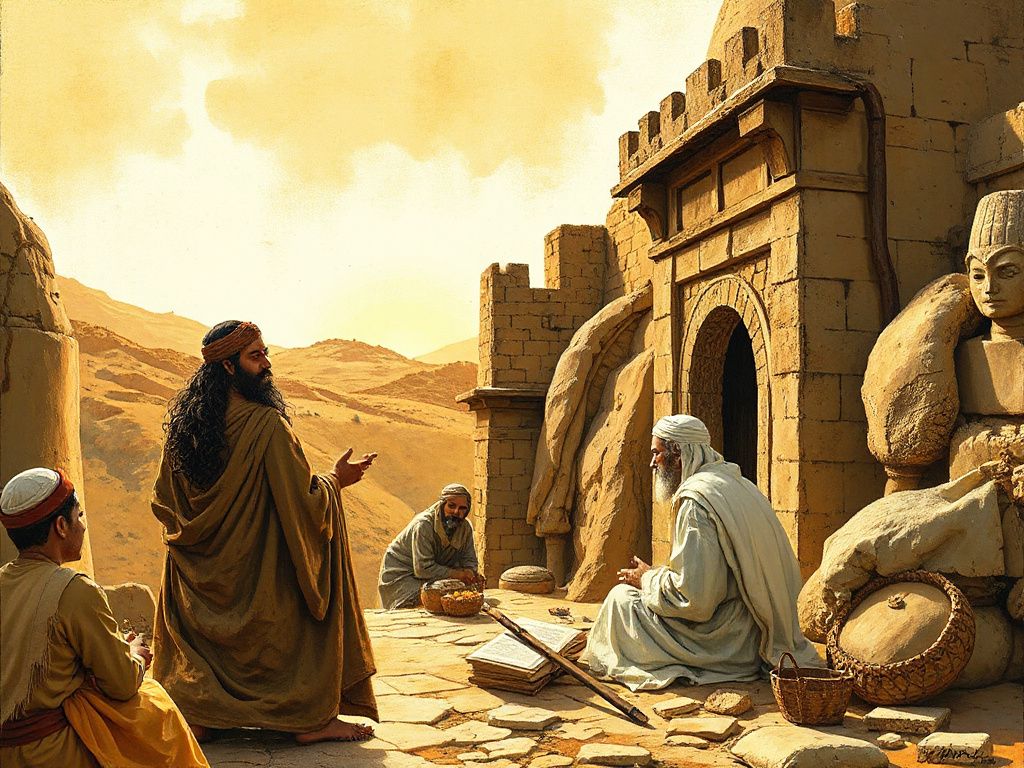
Sirácides 4: Cuidado de los pobres y recompensa de la sabiduría
Sirácides 4 instruye al lector a socorrer al pobre sin demora, actuar con justicia y buscar la sabiduría, que primero disciplina pero luego alegra a quienes se aferran a ella.
Eclesiástico
Elige un capítulo
Elige un capítulo y se abrirá en la pestaña Capítulo actual. Vuelve aquí para elegir otro.
Eclesiástico
Capítulo 4
- 1.Duties toward the Poor and the Oppressed My son, deprive not the poor of his living, and do not keep needy eyes waiting.
- 2.Do not grieve the one who is hungry, nor anger a man in want.
- 3.Do not add to the troubles of an angry mind, nor delay your gift to a beggar.
- 4.Do not reject an afflicted suppliant, nor turn your face away from the poor.
- 5.Do not avert your eye from the needy, nor give a man occasion to curse you;
- 6.for if in bitterness of soul he calls down a curse upon you, his Creator will hear his prayer.
- 7.Make yourself beloved in the congregation; bow your head low to a great man.
- 8.Incline your ear to the poor, and answer him peaceably and gently.
- 9.Deliver him who is wronged from the hand of the wrongdoer; and do not be fainthearted in judging a case.
- 10.Be like a father to orphans, and instead of a husband to their mother; you will then be like a son of the Most High, and he will love you more than does your mother.
- 11.The Rewards of Wisdom Wisdom exalts her sons and gives help to those who seek her.
- 12.Whoever loves her loves life, and those who seek her early will be filled with joy.
- 13.Whoever holds her fast will obtain glory, and the Lord will bless the place she enters.
- 14.Those who serve her will minister to the Holy One; the Lord loves those who love her.
- 15.He who obeys her will judge the nations, and whoever gives heed to her will dwell secure.
- 16.If he has faith in her he will obtain her; and his descendants will remain in possession of her.
- 17.For at first she will walk with him on tortuous paths, she will bring fear and cowardice upon him, and will torment him by her discipline until she trusts him, and she will test him with her ordinances.
- 18.Then she will come straight back to him and gladden him, and will reveal her secrets to him.
- 19.If he goes astray she will forsake him, and hand him over to his ruin.
- 20.Observe the right time, and beware of evil; and do not bring shame on yourself.
- 21.For there is a shame which brings sin, and there is a shame which is glory and favor.
- 22.Do not show partiality, to your own harm, or deference, to your downfall.
- 23.Do not refrain from speaking at the crucial time, and do not hide your wisdom.
- 24.For wisdom is known through speech, and education through the words of the tongue.
- 25.Never speak against the truth, but be mindful of your ignorance.
- 26.Do not be ashamed to confess your sins, and do not try to stop the current of a river.
- 27.Do not subject yourself to a foolish fellow, nor show partiality to a ruler.
- 28.Strive even to death for the truth and the Lord God will fight for you.
- 29.Do not be reckless in your speech, or sluggish and remiss in your deeds.
- 30.Do not be like a lion in your home, nor be a faultfinder with your servants.
- 31.Let not your hand be extended to receive, but withdrawn when it is time to repay.
Qué significa este pasaje
La sección inicial presenta el cuidado de los pobres como un deber ineludible más que como una caridad discrecional. Los ojos del pobre, su hambre y su oración de maldición se tratan como reclamos directos al lector: negar la ayuda provoca al afligido, y el texto advierte que su Creador escucha esa oración. Cuidar al necesitado es, por tanto, no solo una obligación social, sino también teológica, vinculada al honor dado a Dios y a la comunidad («Hazte amado en la asamblea; inclina tu cabeza ante un hombre importante», Sirácides 4:7).
La sección intermedia personifica a la Sabiduría como una maestra que forma a sus discípulos. Ella primero camina con el buscador por «caminos tortuosos», infundiendo temor y disciplina (Sirácides 4:17), pero a quienes perseveran se les prometen gloria, bendición y seguridad (Sirácides 4:13-16). La Sabiduría también se presenta como contenido del habla: se da a conocer por la lengua (Sirácides 4:24), y su búsqueda se vincula con decir la verdad, confesar el pecado y estar dispuesto a hablar en el momento adecuado (Sirácides 4:20-28).
Los proverbios finales se ocupan de la conducta social y la autodisciplina. Se advierte al lector contra la parcialidad, el habla temeraria, el comportamiento dominante en el hogar y la disposición a recibir sin devolver (Sirácides 4:22, 29-31). Estas breves máximas encajan en la preocupación más amplia del capítulo por la reputación: el modo en que uno trata a los pobres, a los gobernantes, a los siervos y a su propia lengua forma el tipo de persona en quien la Sabiduría confiará.
Contexto
Sirácides 4 pertenece a la colección sapiencial del libro conocido en la tradición griega como Eclesiástico y en la tradición hebrea como Ben Sira. La nota editorial simplemente lo señala como contenido complementario, y no se proporciona aquí el texto de los capítulos circundantes, por lo que esta página analiza el capítulo por sí mismo. Internamente, el capítulo se divide en tres bloques: el trato con los pobres (Sirácides 4:1-10), el retrato de la Sabiduría y su disciplina (Sirácides 4:11-19), y máximas más breves sobre el habla, el juicio y la conducta en el hogar (Sirácides 4:20-31).
El capítulo continúa temas ya introducidos en Sirácides 1-3, especialmente el vínculo entre temer al Señor y ordenar la propia vida. Versículos como «te amará más que tu madre» (Sirácides 4:10) y «el Señor ama a quienes la aman» (Sirácides 4:14) muestran que la benevolencia hacia los pobres y la lealtad a la Sabiduría se presentan ambas como respuestas a Dios, no como virtudes independientes.
Preguntas frecuentes
¿Cuáles son los dos temas principales de Sirácides 4?
El capítulo tiene dos temas principales: los deberes hacia los pobres y oprimidos (Sirácides 4:1-10), y las recompensas y disciplinas de buscar la Sabiduría (Sirácides 4:11-19), seguidos de máximas más breves sobre la conducta (Sirácides 4:20-31).
¿Por qué el texto advierte contra provocar la maldición de un pobre?
El capítulo advierte que, si una persona afligida invoca una maldición con amargura de alma, su Creador escuchará su oración (Sirácides 4:6). Negar la ayuda se presenta, por tanto, como algo que Dios toma en serio, no simplemente como un desliz social privado.
¿La Sabiduría en Sirácides 4 solo trae recompensa inmediata?
No. Sirácides 4:17-19 describe cómo la Sabiduría primero camina con el buscador por caminos tortuosos y trae temor, cobardía y disciplina, y solo después vuelve directamente para alegrarlo y revelarle sus secretos. El capítulo presenta la obediencia a la Sabiduría como algo que implica prueba antes de la recompensa.