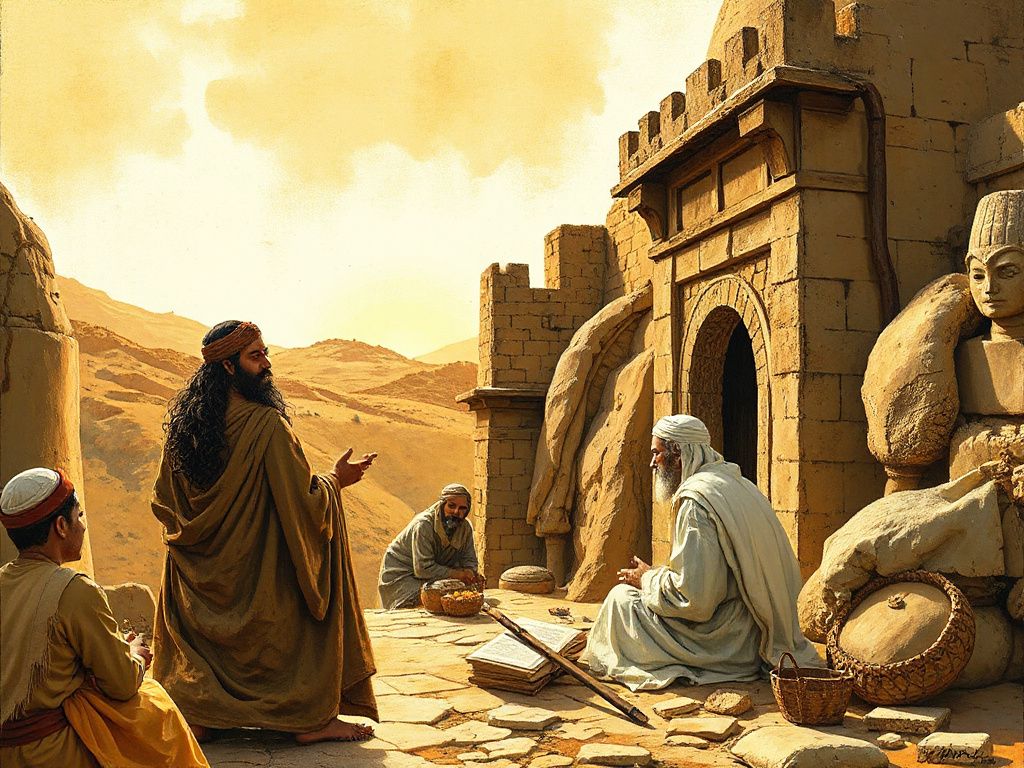
Eclesiástico 9 — Oración de Salomón por la sabiduría
Salomón ora a Dios para que le conceda el don de la sabiduría, a fin de gobernar con justicia al pueblo de Dios y construir el templo.
Eclesiástico
Elige un capítulo
Elige un capítulo y se abrirá en la pestaña Capítulo actual. Vuelve aquí para elegir otro.
Eclesiástico
Capítulo 9
- 1.Solomon’s Prayer for Wisdom “O God of my fathers and Lord of mercy, who hast made all things by thy word,
- 2.and by thy wisdom hast formed man, to have dominion over the creatures thou hast made,
- 3.and rule the world in holiness and righteousness, and pronounce judgment in uprightness of soul,
- 4.give me the wisdom that sits by thy throne, and do not reject me from among thy servants.
- 5.For I am thy slave and the son of thy maidservant, a man who is weak and short-lived, with little understanding of judgment and laws;
- 6.for even if one is perfect among the sons of men, yet without the wisdom that comes from thee he will be regarded as nothing.
- 7.Thou hast chosen me to be king of thy people and to be judge over thy sons and daughters.
- 8.Thou hast given command to build a temple on thy holy mountain, and an altar in the city of thy habitation, a copy of the holy tent which thou didst prepare from the beginning.
- 9.With thee is wisdom, who knows thy works and was present when thou didst make the world, and who understand what is pleasing in thy sight and what is right according to thy commandments.
- 10.Send her forth from the holy heavens, and from the throne of thy glory send her, that she may be with me and toil, and that I may learn what is pleasing to thee.
- 11.For she knows and understands all things, and she will guide me wisely in my actions and guard me with her glory.
- 12.Then my works will be acceptable, and I shall judge thy people justly, and shall be worthy of the throne of my father.
- 13.For what man can learn the counsel of God? Or who can discern what the Lord wills?
- 14.For the reasoning of mortals is worthless, and our designs are likely to fail,
- 15.for a perishable body weighs down the soul, and this earthy tent burdens the thoughtful mind.
- 16.We can hardly guess at what is on earth, and what is at hand we find with labor; but who has traced out what is in the heavens?
- 17.Who has learned thy counsel, unless thou hast given wisdom and sent thy holy Spirit from on high?
- 18.And thus the paths of those on earth were set right, and men were taught what pleases thee, and were saved by wisdom.”
Qué significa este pasaje
Eclesiástico 9 se presenta como la oración de Salomón por la sabiduría. Salomón se dirige a Dios como aquel que hizo todas las cosas por su palabra y formó al hombre mediante su sabiduría para que dominara sobre la creación (vv. 1–2). Pide que la sabiduría, que se sienta junto al trono de Dios, no lo rechace, identificándose como un siervo, débil y de breve vida, con comprensión limitada del juicio y de la ley (vv. 4–5).
La oración continúa recordando que aun un ser humano perfecto, sin la sabiduría de Dios, es considerado como nada (v. 6). Salomón relata haber sido elegido como rey y juez del pueblo de Dios, y haber recibido el mandato de construir un templo y un altar como copia del tabernáculo santo preparado desde el principio (vv. 7–8). Pide que la sabiduría sea enviada desde los santos cielos para estar con él, de modo que sus obras sean aceptables y juzgue con justicia al pueblo de Dios (vv. 10–12).
La sección final reflexiona sobre los límites del entendimiento humano: el razonamiento mortal es insignificante, un cuerpo perecedero abruma el alma, y lo que está en los cielos no puede rastrearse a menos que Dios conceda la sabiduría y envíe el Espíritu Santo desde lo alto (vv. 13–17). Por medio de tal sabiduría, los caminos de los que habitan la tierra son enderezados, los hombres aprenden lo que agrada a Dios y son salvados por la sabiduría (v. 18).
Contexto
El texto completo del capítulo y las referencias cruzadas proporcionados para Eclesiástico 9 no ofrecen más contexto circundante. El capítulo se presenta como una oración unificada atribuida a Salomón, en la que pide sabiduría para gobernar y construir el templo, reconociendo que tal sabiduría solo viene como un don de Dios por medio de su Espíritu.
La nota seleccionada indica que este capítulo se completó retrospectivamente a partir de los capítulos restantes de Eclesiástico fuera de los conjuntos de prioridad P0/P1, sin comentario adicional.
Preguntas frecuentes
¿Quién es el orante en Eclesiástico 9?
El capítulo se presenta como la oración de Salomón, quien se dirige a Dios como creador y pide sabiduría para juzgar al pueblo de Dios y construir el templo.
¿Qué pide Salomón a Dios?
Salomón pide que la sabiduría, que se sienta junto al trono de Dios, sea enviada desde los santos cielos para estar con él, a fin de que sus obras sean aceptables y juzgue con justicia al pueblo de Dios.
¿Por qué la oración enfatiza la debilidad humana?
La oración subraya que el razonamiento mortal es insignificante, que el cuerpo perecedero abruma el alma y que lo que está en los cielos no puede rastrearse, de modo que la sabiduría y el Espíritu Santo deben venir únicamente de Dios.